
Understanding Complete Binary Trees and Uses
Explore complete binary trees 📚, their unique traits, differences from other trees, practical uses in algorithms, and implementation steps for students & pros.
Edited By
Charlotte Price
Strictly binary trees are a specific type of binary tree used widely in computer science and programming. Each node in these trees has either zero or two children—no node is allowed to have just one child. This simple rule makes strictly binary trees especially useful when balancing data or representing decisions where every choice naturally splits into two.
These trees differ from regular binary trees, where nodes can have zero, one, or two children. By enforcing this strict structure, they keep the tree balanced and predictable, which helps in certain algorithms, including searching, sorting, and expression parsing.

Strictly binary trees improve efficiency in many applications because their structure avoids irregular growth seen in other types of trees.
Every node has 0 or 2 children—never one.
Internal nodes always have exactly two children.
Leaf nodes have zero children.
The number of leaves is always one more than the number of internal nodes.
For example, if a trading algorithm uses strictly binary trees, it can simplify decision paths when evaluating buy or sell options, where each node represents a binary decision point.
Strictly binary trees come handy in:
Representing expression trees in compilers, crucial when software processes complex financial calculations.
Building decision trees for automated trading systems, where each decision bifurcates neatly.
Organising hierarchical data in databases particularly when quick binary decisions are common.
In Pakistan, software developers implementing financial analysis applications or working on algorithmic stock trading systems find strictly binary trees to be efficient and easier to maintain compared to other data structures.
Next, we will explore common operations on strictly binary trees, how to implement them practically, and the subtle differences from other tree types used in programming.
Strictly binary trees play an important role in understanding structured data organisation, especially when each node must have either zero or two children. This restriction helps simplify certain algorithms and makes these trees ideal for specific use cases in programming and computing. In practical terms, strictly binary trees allow for predictable tree shapes, making recursive operations more efficient and easier to implement compared to other binary tree types.
Strictly binary trees are distinguished by the rule that every node has either no children or exactly two children. Unlike general binary trees, where nodes can have one or no children, strictly binary trees avoid the complexity that arises from nodes with only one child. This property ensures a symmetric or balanced structure which proves valuable when designing tree-based algorithms.
For example, in parsing arithmetic expressions, strictly binary trees can represent operations where each node (operator) has exactly two operands (children), simplifying evaluation logic. This characteristic also means that the total number of nodes often follows specific relationships, which can be useful when analysing tree heights and sizes.
Visually, these trees are usually depicted with nodes connected in a way that every branching node clearly shows two children or none. Common terminology includes terms like "leaf nodes" (nodes with zero children) and "internal nodes" (nodes with two children). Understanding these basics assists programmers in implementing tree traversals and modifications cleanly.
Strictly binary trees are essential for organising data in ways that facilitate efficient search, insertion, and deletion. Algorithms operating on such trees benefit from guaranteed node structure which often leads to predictable performance. For instance, tree traversals such as inorder, preorder, and postorder handle strictly binary trees in a straightforward manner without worrying about one-child nodes disrupting the traversal sequence.
In algorithm design, strictly binary trees provide a solid foundation for recursive methods, exemplified in syntax tree evaluation within compilers or implementing decision-based models. Their consistent branching pattern aids in maintaining balanced operations, which is especially relevant in environments where computational resources are limited, like academic labs in Pakistan.
Common scenarios for strictly binary trees include expression parsing, binary decision diagrams, and modelling hierarchical relationships where dual child nodes represent paired connections. In competitive programming contests, knowledge of these trees allows solving problems involving tree structures with enforced child constraints, which can often appear in MDCAT, ECAT, and university-level computer science quizzes.
Strictly binary trees offer a clear, efficient way to manage branching structures, streamlining both theoretical understanding and practical coding challenges.
Understanding the basics of strictly binary trees equips developers and students alike with tools to tackle complex problems more confidently, especially when handling structured datasets in Pakistan’s growing software development landscape.
Strictly binary trees exhibit unique core properties that distinguish them within the family of binary trees. These properties govern how nodes connect and influence the tree's performance in various algorithms. Understanding these characteristics is essential for developers and analysts who deal with hierarchical data, particularly when optimising structures for efficient search or data parsing.
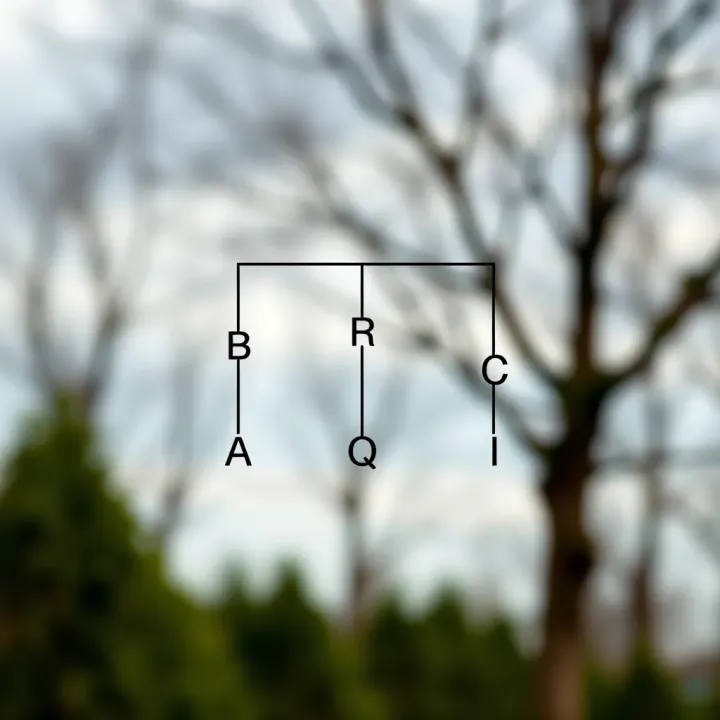
A defining feature of strictly binary trees is the requirement of zero or two children per node. Each node either acts as a leaf with no children or as an internal node with exactly two children. This binary rule removes the possibility of having a node with a single child, which simplifies certain recursive algorithms used in tree traversals and manipulations. For example, in decision-making algorithms, this structure ensures that every decision node branches uniformly, aiding in predictable tree dynamics.
Equally important is the rule that no nodes have only one child. This prevents irregular shapes and imbalanced branches, which could otherwise complicate tree operations. Imagine a trading decision tree where one decision leads to another but skips options on the other side. The absence of single-child nodes ensures consistency so that every split represents a full binary choice, supporting clearer logic and easier debugging.
Calculating the height and node count in strictly binary trees follows well-defined patterns due to their rigid node structure. The height measures the longest path from the root to any leaf, while the node count reflects the total number of nodes involved. In strictly binary trees, the total number of nodes is always an odd number because every internal node adds two children but there’s one root node without a parent. For instance, a tree of height 3 will have 7 nodes: 1 root, 2 children, and 4 leaves.
The property of balanced growth implications means strictly binary trees tend toward balanced form when constructed or maintained carefully. Balanced growth is crucial for keeping operations, such as search or insertion, efficient. In practice, an unbalanced tree resembles a linked list and leads to slow performance. Balanced strictly binary trees help protect the speed of financial data search algorithms or crypto transaction trees where timeliness is key.
Strictly binary trees, by their structure, allow for predictable and optimised traversal, making them ideal for decision systems and parsing tasks common in trading algorithms and financial modelling.
To sum up, the node structure rules simplify the tree's integrity while height and size relationships provide insight into its efficiency and behaviour, both essential knowledge for leveraging strictly binary trees in complex applications.
Operations on strictly binary trees play a significant role in managing and utilising this data structure efficiently. Understanding traversal methods and how to modify the tree without breaking its strict binary property is key for programmers, especially in fields like algorithm design and software development. These operations are fundamental to maintain the integrity and usefulness of strictly binary trees in real-world applications.
Traversal methods such as inorder, preorder, and postorder are classic ways to visit all nodes in a binary tree. Inorder traversal visits the left subtree, then the node, followed by the right subtree. Preorder starts with the node, followed by left and right subtrees, while postorder visits both subtrees first before the node. For example, in expression trees used by compilers, inorder traversal helps print expressions in the correct sequence.
Implementing these requires simple recursive or iterative techniques common in programming languages like C++ or Python. The strict binary nature means each node has either no children or exactly two, which simplifies traversal since you never encounter just one child to handle. This reduces edge cases and can speed up traversal processes.
The strict binary property also influences traversal efficiency. Since nodes with only one child do not exist, algorithms avoid unnecessary conditional checks for missing children. This predictability helps optimise traversal code, making it easier to debug and maintain, particularly useful in resource-constrained environments such as educational labs in Pakistan.
Maintaining the strictness of the tree during insertion and deletion is tricky. When adding a new node, you cannot simply add one child; you must insert pairs or adjust the structure so that every node still has zero or two children. For instance, adding one child to a leaf violates strictness, so developers often insert nodes in pairs or reorganise to preserve balance.
Deletion poses similar challenges. Removing a node that has children may force restructuring to avoid nodes with a single child. A common approach is replacing the deleted node with a subtree or leaf that ensures all nodes retain the zero or two-child rule. This often makes deletion more complex than in other binary trees and requires careful planning.
Common strategies involve using placeholder nodes or temporary dummy nodes during insertion or deletion to maintain the strict form. Pitfalls include inadvertently creating nodes with only one child, which breaks the tree's rules and may cause errors in algorithms relying on strictness. For example, careless deletion can lead to a node with one child, complicating traversals and data retrieval.
Ensuring strictness during operations is essential; otherwise, the tree loses its defining properties and may lead to faulty algorithm behaviour.
In practice, engineers must plan insertions and deletions carefully, often redesigning parts of the tree. This complexity explains why strictly binary trees are less common for general use but preferred in specific cases like expression parsing, where their properties offer neat computational advantages.
Understanding how strictly binary trees differ from other types of binary trees is useful for selecting the right structure in software development and algorithm design. Strictly binary trees require every node to have either zero or two children. This rule impacts their shape, height, and how operations like insertion or deletion are handled. Comparing them with full and complete binary trees highlights subtle yet important distinctions that affect performance and use cases.
Both strictly binary trees and full binary trees share the characteristic that nodes do not have just one child; they either have none or exactly two children. This overlap often causes confusion. However, the full binary tree emphasises completeness in a slightly different way. Strictly binary trees focus on the structure alone, while full binary trees sometimes relate to trees where all leaves are at the same depth or level. Still, in many practical cases, the terms are used interchangeably because the condition of zero or two children is central to both.
For example, in parsing expression trees—a common application in compilers—the strict binary tree property ensures every operator node has two operands or none if it's a leaf. This mirrors a full binary tree structure where all internal nodes have two children. Yet, full binary trees may also include additional constraints depending on context, such as all leaves being on the last or second last level, which strictly binary trees don't require.
Complete binary trees differ significantly from strictly binary trees. A complete binary tree fills every level fully, except possibly the last, which is filled from left to right. This means nodes can have one child in some cases. In contrast, strictly binary trees disallow nodes with exactly one child.
Structurally, this difference means that complete binary trees often have better space utilisation and more predictable height, making them suitable for applications like heaps where balance matters. Meanwhile, strictly binary trees may become unbalanced since each node must either have two children or none, without enforced filling order.
Choose strictly binary trees when the domain demands exact pairing, such as expression parsing or decision trees where decisions split strictly into two options. Their definitive zero or two children rule helps reduce ambiguity and eases recursive processing.
Complete binary trees work better when optimising for memory or speed is key, such as in priority queues implemented as heaps. The left-to-right filling approach minimises tree height, favouring fast access and insertion. For example, in Pakistani software development contexts, using complete binary trees for heaps in scheduling algorithms or database indexing often delivers better performance than strictly binary trees.
Recognising these differences lets developers pick the binary tree most suited to their needs, balancing structural rules with practical requirements.
Implementing strictly binary trees is essential for turning theory into practical applications, especially for software developers and students in Pakistan who encounter these structures in various programming tasks. Understanding the best data structures and coding habits increases efficiency and reliability when working with strictly binary trees.
In most programming languages like C++, Java, and Python, strictly binary trees are implemented using pointers and node objects. Each node typically contains data and two pointers (or references) to its children. This approach reflects the natural binary relation and allows dynamic memory allocation, which is helpful when the tree size isn’t fixed. For example, a node in C++ might have pointers to left and right children, making it easy to add or remove subtrees while maintaining the strictly binary property.
While pointer-based implementations are common, some opt for array representations. Arrays map tree elements to indices based on their position, commonly in heap-like structures. However, such array representations have limitations for strictly binary trees because they require a fixed size upfront and may waste space when nodes are missing or the tree is unbalanced. This is less flexible and can lead to inefficient memory use, especially in environments with limited RAM, such as many Pakistani educational labs.
Memory management is a key consideration when implementing strictly binary trees, particularly in resource-constrained settings like many Pakistani computer labs. Dynamically allocating memory for nodes helps avoid preallocating large arrays, which may not be feasible due to limited memory. Programmers should also carefully deallocate nodes to prevent memory leaks, a common issue in languages like C and C++. Tools such as valgrind aid in detecting such problems, ensuring smoother performance even on less powerful machines.
Debugging and testing are equally critical. Since strictly binary trees require nodes to have zero or two children, tests must check whether this property holds after every modification like insertion or deletion. Writing unit tests to verify tree structure and using print traversal outputs can quickly catch errors. Debugging tools in IDEs like Code::Blocks or Visual Studio Code are readily available in Pakistan’s mainstream programming education and support tracing pointer errors or invalid references.
Ensuring proper implementation and maintenance of strictly binary trees through pointers, memory management, and systematic debugging leads to more robust applications that save time and avoid costly errors.
By keeping these implementation nuances in mind, developers can better harness strictly binary trees for practical, real-world software challenges.
Strictly binary trees find practical use in Pakistan’s fast-growing tech industry, especially where precise decision-making and efficient data representation are required. Their strict structure helps developers manage complex data while ensuring algorithms remain efficient, a key need in software development and competitive programming. Let’s explore the main applications relevant to this environment.
Parsing expressions and syntax trees play a vital role in compilers and interpreters, which are foundational components of many software tools. Strictly binary trees form the backbone of expression trees used to parse and evaluate mathematical expressions or programming language syntax. For example, when building an arithmetic parser in a university project, each internal node represents an operator, and the child nodes represent operands or sub-expressions. Because every operator requires two operands, the strictly binary tree fits naturally here, preventing malformed expressions with only one child node.
This strict structure aids rapid evaluation and simplification of expressions, benefiting many local software tools, including calculators, compilers for Urdu-based scripting languages, and even simple applications in fintech startups that process transaction expressions.
In binary decision processes, strictly binary trees support efficient decision-making frameworks in software. Each internal node represents a decision point with two possible outcomes, guiding software systems through branches to reach conclusions or actions. For instance, decision trees in fraud detection software in Pakistan’s banking sector might use strictly binary trees to separate normal and suspicious transactions through a chain of yes/no questions.
Moreover, such binary decision trees simplify code logic in mobile apps, like health monitoring tools or agricultural advisory platforms, where fast, clear choices lead to recommendations. Their strict shape prevents ambiguity and ensures that every decision node fully categorizes input data into two outcomes.
Strictly binary trees are integral to MDCAT, ECAT, and university curricula in Pakistan. Topics covering tree structures often emphasise strictly binary trees because their properties teach students about balanced data organisation and algorithm efficiency. Many admission tests include questions on tree traversals, insertion, and deletion that highlight strictly binary tree characteristics. Understanding these trees helps aspirants grasp deeper concepts required for engineering and CS programmes.
In Pakistani coding competitions, such as those held by universities and local programming groups, problems involving strictly binary trees test contestants on efficient traversal methods, tree reconstruction, and dynamic decision-making algorithms. For example, a common question could involve reconstructing a strictly binary tree from given preorder and inorder traversals or optimising paths within the tree to solve real-world problems.
Strictly binary trees offer a structured framework that aligns well with both software needs and the academic culture in Pakistan, bridging theory with practical coding challenges.
Whether you’re developing software tools or preparing for competitive exams, mastering strictly binary trees provides a clear advantage in navigating complex data challenges effectively and efficiently in Pakistan’s evolving tech space.
Explore complete binary trees 📚, their unique traits, differences from other trees, practical uses in algorithms, and implementation steps for students & pros.
Explore binary trees in computer science 🌳: structures, types, traversal methods & real-world uses. Essential for students, developers & pros in programming.

Explore full binary trees, where each node has zero or two children 🧩. Learn their structure, counting methods, and real-world applications in Pakistani tech and programming.
Understand binary search trees (BST) in detail 🌳: their structure, insertion, searching, and practical programming uses for efficient data handling in computer science.
Based on 6 reviews