

Forex Trading with Gold: Key Strategies and Insights
💰 Learn how gold acts as a safe alternative currency in forex trading, plus smart strategies, price influencers, and risks unique to Pakistani traders.
Edited By
George Thompson
Daily forex trading volume measures the total amount of currency exchanged in the forex market within a 24-hour period. It reflects the overall activity and interest in currency pairs at any given time. Globally, the average daily turnover exceeds $6 trillion, with key financial centres like London, New York, Tokyo, and Singapore handling the bulk of this activity.
For traders in Pakistan, understanding daily forex trading volume helps gauge market liquidity and volatility. Higher volume typically means more liquidity, allowing easier entry and exit from trades without large price shifts. Conversely, low volume can lead to erratic price movements, which risks stop-loss triggers and unpredictable swings.
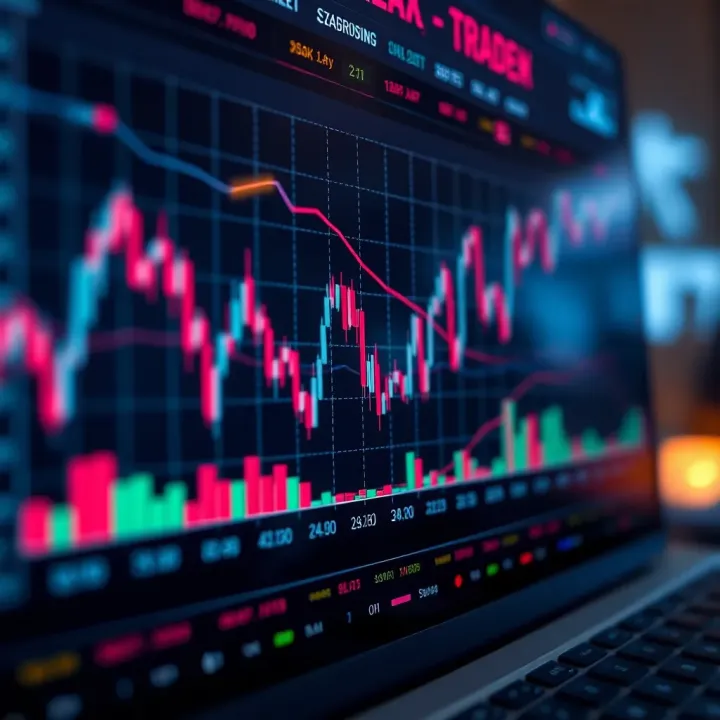
Several factors influence daily trading volume:
Market sessions: Volume peaks align with London and New York sessions overlapping, especially between 3 pm and 6 pm Pakistan Standard Time (PKT).
Economic announcements: Interest rate decisions by central banks, inflation data, and GDP reports increase trading as market participants react.
Geopolitical events: Elections, trade tensions, or regional conflicts often trigger surges in volume due to risk adjustments.
Major currency pairs like USD/PKR, EUR/USD, GBP/USD, and USD/JPY dominate trading volume. USD/PKR remains especially relevant for Pakistani traders due to its direct impact on import-export businesses and remittances.
Monitoring volume alongside price action improves trade analysis. Increased volume during price moves confirms strength, whereas falling volume can signal a weakening trend.
Traders can use volume data in several practical ways:
Confirming trends: Rising volume supports ongoing price trends, signalling continuation.
Spotting reversals: Decreasing volume with price moves may hint at upcoming reversal.
Timing entries and exits: High volume periods offer better execution and tighter spreads.
By tracking daily forex trading volume, Pakistani traders gain insight into market behaviour, enhancing decision-making and risk management. Observing volume patterns during local market hours and major global sessions can help you find the best times to trade and avoid low-liquidity traps.
Daily forex trading volume represents the total value of currency trades executed within a day across the global foreign exchange market. It gives traders and analysts a sense of how active the market is at any point. For example, during the London and New York sessions overlap, the volume ramps up sharply, indicating a busy market with many participants. This matters because higher volume usually improves trade execution, tightens spreads, and signals stronger market interest in certain currency pairs.
Measuring volume in the forex market is trickier than in stock markets since there is no central exchange tracking all transactions. Instead, volume estimates come from major liquidity providers, brokers, and futures exchanges. Platforms like the Chicago Mercantile Exchange (CME) offer futures volume data, while spot market brokers publish their own figures. While these numbers don’t capture the complete market, they serve as valuable proxies. For instance, a sudden jump in spot volume from your broker often suggests more traders are buying or selling, hinting at upcoming price moves.
In terms of spot market vs. futures and options trading volumes, the spot market dominates overall forex trading, accounting for around 80% of volume globally. This is where traders exchange currencies for immediate delivery. Futures and options add another layer, mostly from institutional traders hedging currency risk or speculating over longer horizons. These derivatives trade on regulated exchanges with transparent volume reporting. Understanding the balance between spot and derivatives helps investors gauge market sentiment. For example, rising futures volume on the USD/PKR may indicate increased hedging demand by importers and exporters in Pakistan.
Volume serves as a clear indicator of market activity. When volume is high, it shows strong participation and interest. Low volume can point to quiet market hours or uncertainty. Consider a scenario where economic data like Pakistan’s inflation rate is released: traders flood the market to adjust their positions, pushing volume up. Such spikes often coincide with sharper price changes, providing clues on when the market is most lively.
Finally, volume relates directly to liquidity and price discovery. Liquidity means how easily you can enter or exit a trade without affecting the price much. High volume ensures tighter bid-ask spreads and faster trade execution. It also helps the market discover the "right" price as supply and demand forces compete. For instance, during holiday periods in Pakistan when trading thins out, spreads widen and prices may become more volatile due to lower volume. Overall, tracking daily forex volume helps traders understand market dynamics and manage risks better.
Monitoring daily forex trading volume offers key insights into trading conditions, helping you spot active sessions, predict price moves, and plan entry or exit points effectively.
Forex volume estimates mainly come from major brokers and futures exchanges.
Spot market has the largest share of forex trading volume compared to derivatives.
Volume spikes often coincide with important economic announcements.
Higher volume improves liquidity, reducing costs for traders.
Price discovery becomes more efficient in high-volume conditions.
Understanding these aspects enables traders in Pakistan and globally to interpret market signals and make informed decisions based on actual trading activity rather than guesswork.
Daily forex trading volume does not stay constant. Several factors impact how much trading occurs on any given day, shaping market liquidity and price movements. Understanding these helps traders and analysts anticipate shifts in activity, improving decision-making.
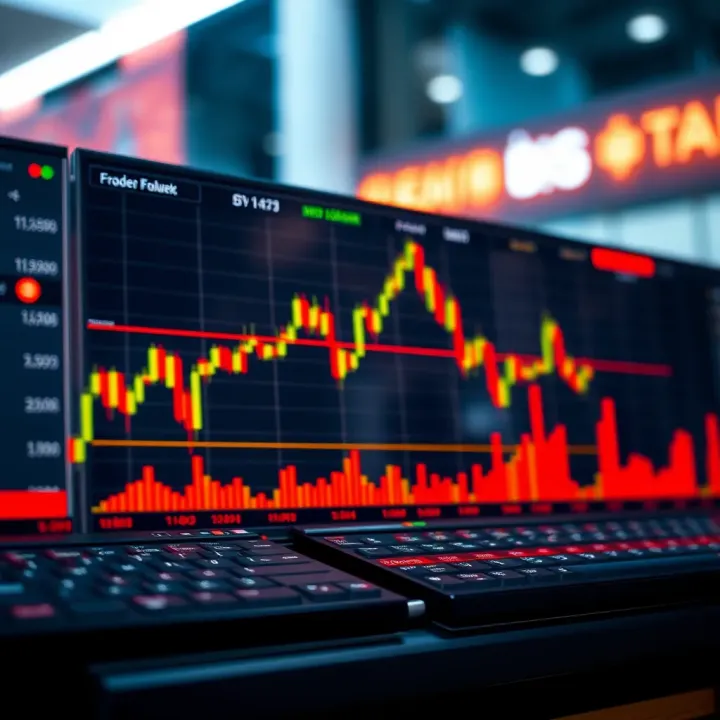
The forex market operates 24 hours a day through major regional sessions: Tokyo, London, and New York. Each session corresponds to the working hours of key financial centres and sees different currency pairs more active depending on the region’s economic focus. For example, during the Tokyo session, the Japanese yen pairs tend to dominate, while London focuses on European currencies, and New York spotlights the US dollar.
The practical implication for traders is clear — knowing which session is active can help time trades better. For instance, a Pakistani trader would consider the London-New York overlap period particularly carefully as it often brings heightened volume.
Overlaps between these sessions—especially the London-New York overlap—produce the highest forex turnover. This occurs because markets in both regions operate simultaneously, bringing together more participants. This surge in volume typically results in tighter spreads and better price execution.
For example, between 2 pm and 5 pm PKT, when London and New York markets intersect, liquidity spikes. This period often offers the best opportunities for entering or exiting trades, especially for pairs like EUR/USD or GBP/USD, where volume is highest. Traders usually avoid times outside these overlaps due to lower activity and wider spreads.
Central bank announcements are pivotal in shaping trading volumes. When the State Bank of Pakistan or the US Federal Reserve announces changes in interest rates or monetary policy, market participants react quickly. These decisions can lead to sharp spikes in volume as traders adjust positions based on new expectations.
For instance, a surprise hike in the US Federal Reserve rate often leads to increased trading in USD pairs, as investors reassess risk and returns. Similarly, SBP’s unexpected moves influence PKR trading volume immediately.
Economic indicators like the Consumer Price Index (CPI) and Gross Domestic Product (GDP) reports also affect forex volume. Strong data can boost confidence in a currency, prompting increased trade, while disappointing numbers result in sell-offs.
For example, a higher-than-expected GDP growth figure in the Eurozone can trigger a wave of buying in the euro, increasing volume. Pakistani traders monitoring such releases need to plan their trades around these announcements to manage risk and capture volatility effectively.
Shifts in risk appetite significantly influence forex volumes. When investors feel confident about the global economy, they tend to move away from safe-haven currencies like the Japanese yen or Swiss franc, raising volume in riskier currencies such as the Australian or New Zealand dollar.
Conversely, during uncertain times, volume often shifts back towards traditional safe havens as traders seek stability. Pakistani traders might notice this when markets react to global crises.
Political uncertainty can cause sharp spikes in trading volume. Events like elections, geopolitical conflicts, or sudden crises increase volatility as market participants attempt to price in new risks.
For example, tensions in the Middle East or political upheaval in major economies usually cause rapid buying or selling pressure. This influx of trades elevates daily forex volumes, creating both risks and opportunities that traders need to watch closely.
Understanding these factors helps traders align their strategies with market rhythms, making timing and volume work in their favour.
Daily forex trading volume mostly revolves around a handful of major currency pairs, which are the backbone of global forex markets. Understanding these pairs helps traders gauge where most activity happens and which pairs offer the best liquidity and tighter spreads. This section breaks down the significance of the US Dollar’s dominance and highlights popular high-volume cross pairs.
The US Dollar (USD) plays a leading role in global trade and finance. Most international transactions, whether for oil, machinery, or textiles, are priced or settled in USD. This widespread usage ensures that USD is part of nearly 88% of all forex trades daily. For Pakistani traders, this dominance means USD pairs like USD/PKR often reflect broader global market trends, making them highly liquid and easier to trade.
USD’s involvement also means its currency pairs generally have higher volume compared to others. Pairs like USD/EUR, USD/JPY, and USD/GBP show tight spreads because many banks and financial institutions actively trade them. The high trading volume leads to less price manipulation and better execution speeds. For instance, during UK or US market hours, USD pairs tend to be more active, offering opportunites for intraday traders to enter and exit positions quickly.
Cross currency pairs without the US Dollar, such as EUR/GBP and EUR/JPY, also attract significant volume. These pairs reflect trade flows and economic links between specific regions. EUR/GBP, for example, often mirrors economic news from Europe and the UK, while EUR/JPY is sensitive to European and Japanese market sentiment. They offer alternatives for traders looking to diversify away from USD risk but still want decent liquidity.
Regional factors strongly influence volume in these crosses. Asian markets tend to boost JPY pairs during Tokyo trading hours. Likewise, EUR/GBP sees the most volume during London’s session due to its proximity and economic ties. Pakistani traders can capitalise on these time-zone effects by timing trades when volumes are naturally higher in these crosses, helping reduce spreads and slippage.
Volume matters because it affects liquidity and execution. Major pairs involving the USD generally offer the best trading conditions, while crosses like EUR/GBP provide regional opportunities but may have varying liquidity based on the time of day.
In short, keeping an eye on which currency pairs are active during specific market sessions can provide practical advantages, enabling smarter trade timing and better risk management.
Market liquidity depends heavily on daily forex trading volume. When volume is high, more buyers and sellers participate, making it easier to buy or sell currencies without causing big price swings. This directly affects the forex market’s efficiency and trading costs. On the other hand, low volume can lead to wider spreads and delayed order executions, which traders want to avoid.
Tighter spreads and faster execution naturally follow when volume is strong. Spreads – the difference between the bid and ask prices – tend to shrink because many participants compete to trade at the best prices. For example, during the London-New York overlap, volume spikes lead to noticeably tighter spreads, saving traders money on each transaction. Additionally, fast order execution reduces the risk of slippage, where traders get prices much different from the quotes they see. This matters especially for intraday and scalping strategies where timing is crucial.
Role of liquidity providers and market makers becomes clearer with volume fluctuations. These entities stand ready to buy or sell currencies, absorbing imbalances in supply and demand. When volume is high, market makers have less risk holding positions, encouraging them to quote tighter prices and larger volumes. In contrast, in thin markets or off-hours, they may widen spreads to compensate for the increased risk. For Pakistani traders using platforms like EasyPaisa or connected to international brokers, understanding when liquidity providers are active helps anticipate trading conditions.
Volume spikes during volatile periods occur because more traders react to news, geopolitical events, or economic surprises. For instance, after a State Bank of Pakistan interest rate announcement, currency pairs involving the PKR often see volume jumps as investors reposition their trades. Heavy volume during such times can intensify price swings, causing rapid moves that both create opportunities and risks.
Volume surges flag moments of heightened market activity and are often the best indicators of where volatility is headed next.
Volume as a predictor of price movement intensity helps traders estimate how strong a trend might be. Rising volume along with a price move suggests confirmations, like when the EUR/USD climbs sharply with increasing volume, signalling genuine buying interest. Conversely, if volume falls while prices rise, it could warn of a weakening trend and possible reversal. Pakistani forex traders relying on volume indicators such as On-Balance Volume (OBV) gain an edge by spotting when momentum is likely to continue or fade.
Understanding how volume influences liquidity and volatility equips traders with practical insights to time entry and exit points better, manage risks, and optimise trade execution. This knowledge is particularly valuable in markets where information flow and participation vary widely across sessions and currency pairs.
Forex volume data offers traders a measurable edge when making decisions. Understanding daily trading volume helps identify genuine moves versus false signals in the market. When volume confirms price actions, it signals stronger conviction among market participants, reducing guesswork and enhancing timing.
Several volume-based indicators assist in technical analysis, with On-Balance Volume (OBV) and Volume Weighted Average Price (VWAP) widely used. OBV adds volume on up days and subtracts it on down days, offering insights into buying and selling pressure. When OBV trends upward along with price, it indicates accumulation, pointing to a likely continuation. Conversely, divergence between OBV and price may warn of reversal ahead.
VWAP calculates the average price weighted by volume for the trading session, serving as a benchmark for fair value. Traders use VWAP to gauge whether a currency is trading above or below its average price considering volume, helping confirm intraday trends or spot exhaustion points. For example, if price rises but stays below VWAP, buying interest might be weak.
Volume also plays a key role in confirming trends and spotting reversals. A rising price accompanied by increasing volume suggests a strong uptrend, as more traders join the move. Conversely, if volume starts to drop while price climbs, this weakens the trend and often foreshadows a reversal. In downtrends, similar volume analysis helps decide when selling pressure is fading, signalling a potential bottom.
Volume confirms the strength behind market moves; ignoring it risks falling for traps caused by low participation spikes.
Pakistani traders benefit from accessing reliable forex volume data through both international platforms like MetaTrader and local brokerage firms offering real-time feeds. Since volume information in forex is not as transparent as equities, opting for brokers that provide tick volume or proxy volume helps approximate true market participation. Keeping abreast of trusted sources can improve trade timing and risk management.
Timing trades according to known volume patterns and market hours is vital. For example, during the London-New York overlap, forex volume peaks, offering narrower spreads and faster executions. Pakistani traders should plan important entries or exits in these windows, avoiding low-volume periods such as Asian sessions where liquidity thins out and spreads widen.
Understanding volume fluctuations alongside local economic events and global session timings particularly aids intraday and swing traders. In sum, blending volume data with price movements in line with market hours helps Pakistani traders sharpen entries, exits, and position sizing, boosting overall profitability and reducing exposure to sudden volatility.
This practical use of volume data closes the gap between guesswork and informed trading, making it a cornerstone tool for any forex trader in Pakistan or globally.
💰 Learn how gold acts as a safe alternative currency in forex trading, plus smart strategies, price influencers, and risks unique to Pakistani traders.
Learn how to start forex trading in Pakistan 🇵🇰 with expert tips on choosing brokers, legal rules, account setup, and managing risks easily and safely.
Learn effective forex trading strategies in Pakistan 🇵🇰 covering market analysis, risk management, legal steps, and platform choices for smarter, safer trades 📈.
📉 Learn the ins and outs of forex trading in Pakistan: how it works, legal rules, trusted platforms, risks, and tips for beginners to trade smartly. 🇵🇰
Based on 6 reviews