

Crypto Trading Bots: A Practical Guide for Pakistani Traders
Explore how crypto trading bots automate trades, manage risks & boost efficiency for Pakistani traders 🇵🇰 with practical tips on selection & safe use in volatile markets.
Edited By
David Mitchell
Cryptocurrency trading has grabbed attention in Pakistan, sparking interest among traders, investors, and financial analysts alike. While the digital currency market brings opportunities for profit, it also comes with risks and a complex legal environment. Understanding these elements is essential for anyone thinking of entering the crypto space here.
The State Bank of Pakistan (SBP) does not recognise cryptocurrencies as legal tender, and their use for payment is restricted. However, there is no outright ban on crypto trading or investment by individuals. This grey area means traders must proceed cautiously and stay updated with any policy changes from authorities.
Popular platforms used by Pakistani crypto enthusiasts include Binance, Coinbase, and local exchanges facilitating crypto-to-fiat transactions. Many rely on peer-to-peer (P2P) networks and services like JazzCash and Easypaisa for fund transfers, as direct banking support is limited due to regulatory constraints.
Before starting, investors should consider:
Market volatility and price swings that can lead to substantial gains or losses
The security of digital wallets and choosing platforms with robust safeguards
Tax implications, as the Federal Board of Revenue (FBR) is increasingly focusing on tracking crypto earnings
This guide will help you navigate these challenges, offering practical tips to trade responsibly while understanding Pakistan's specific legal and financial framework. Whether you are a seasoned trader or new to crypto, keeping informed is the first step towards making smart decisions in this evolving market.
Understanding the regulatory environment is vital for anyone involved in crypto trading in Pakistan. Without clear rules, traders risk legal issues, while investors may face difficulties in protecting their gains. This section explains the current legal framework, highlights taxation rules, and shows how regulatory uncertainty impacts market participants.
The State Bank of Pakistan (SBP) plays a key role in setting the tone for cryptocurrency use. While SBP has not outright banned cryptocurrencies, it prohibits banks and financial institutions from facilitating crypto transactions. This stance essentially restricts direct interaction of traditional banking with crypto platforms, limiting easy fund transfers between bank accounts and crypto wallets.
Besides SBP, other financial regulators like the Securities and Exchange Commission of Pakistan (SECP) monitor activities that could impact investors or financial markets. However, the SECP has not yet introduced specific crypto regulations, leaving a gap in investor protections and market oversight.
Despite no formal ban on owning or trading cryptocurrencies, the government has issued multiple warnings against their use. Crypto is not recognised as legal tender, and many transactions occur on peer-to-peer platforms or international exchanges to avoid restrictions.
These restrictions complicate the process of converting crypto to Pakistani rupees smoothly. For example, users must rely on informal channels or P2P networks, which carry higher risk. Additionally, advertising or promoting crypto as an investment may attract regulatory attention due to the unregulated space.
Traders face uncertainty as the legal status of crypto remains unclear. This ambiguity creates a cautious approach among banks, limiting payment options and slowing verification processes on international exchanges. Moreover, lack of clear guidelines means traders cannot fully rely on dispute resolution or consumer protection mechanisms.
On the positive side, this uncertain environment has led to a thriving P2P market in cities like Karachi and Lahore, where communities have developed informal trust networks. Still, without formal rules, risks of scams and price manipulation remain significant.
Income earned through cryptocurrency trading is subject to taxation under Pakistan’s Income Tax Ordinance. Gains from selling or exchanging crypto assets fall under capital gains or business income, depending on the frequency and volume of trades.
For instance, a day trader frequently buying and selling Bitcoin may be taxed as a business, whereas a casual investor holding Ethereum for several months might be liable for capital gains tax. This distinction affects tax rates and filing requirements.
The Federal Board of Revenue (FBR) requires individuals to declare crypto income on their tax returns. However, the lack of specific forms or clear instructions complicates compliance. Some traders report gains under general 'other income' categories while awaiting dedicated guidance.
Filing accurately requires keeping detailed records of transactions, including purchase prices, dates, and sale proceeds. Failure to report can lead to penalties, especially if crypto earnings exceed Rs 5 lakh in a tax year.
Clarity on cryptocurrency regulation and taxation will help Pakistani traders avoid legal troubles and build confidence in the market. Staying updated on SBP and FBR announcements is essential for responsible crypto involvement.
Choosing the right trading platform is a key step for anyone interested in crypto trading in Pakistan. These platforms connect users to the global cryptocurrency market, offer tools for buying and selling, and often provide wallet services. Understanding which platforms are accessible, secure, and compliant with local regulations helps traders avoid unnecessary risks and delays.
Platforms like Binance and Coinbase remain important gateways for Pakistani investors looking to enter the crypto space. Binance, for example, offers a wide range of cryptocurrencies and lower transaction fees, making it attractive for regular traders. Coinbase, though more restrictive in certain jurisdictions, is known for its user-friendly interface and security features.
Despite Pakistani regulatory uncertainties, many traders manage to access these major exchanges through verified accounts, enabling them to buy, sell, or hold cryptocurrencies. However, due diligence is necessary since withdrawal options in PKR or direct bank integration can be limited or subject to abrupt changes due to policy shifts.
Opening an account on these platforms typically requires a Know Your Customer (KYC) process. Traders must submit valid CNIC scans and proof of address for identity verification. This step helps exchanges comply with international anti-money laundering rules and enhances security.
Though some users find KYC tedious, it protects accounts from fraudulent access and withdrawal restrictions. For Pakistanis, completing KYC smoothly depends on preparing clear identification and understanding platform-specific requirements, such as selfie verification or utility bill submission.
Peer-to-peer (P2P) exchanges have gained ground in Pakistan as alternatives to international platforms. Services like LocalBitcoins and specialized Pakistani crypto groups help match buyers and sellers directly. These communities often serve traders who face challenges using global exchanges due to banking or regulatory hurdles.
However, trading through P2P exchanges demands caution. Trust varies greatly between counterparties, and without proper safeguards, scams can occur. Well-established Pakistani crypto communities provide some level of vetting but do not fully eliminate risk.
Security is a major consideration when dealing with local or regional platforms. Traders should prioritise platforms with transparent fee structures, positive user feedback, and responsive customer support. Using escrow services in P2P trades and keeping transactions documented help reduce disputes and fraud.
Strong security practices and choosing reputable platforms are crucial to protecting your investment in Pakistan’s crypto market. Always verify the legitimacy of exchanges and never rush into trades without clarity.
In summary, Pakistani crypto traders have a range of platform choices, from global giants to local P2P setups. Knowing the pros and cons of each helps in navigating this complex environment effectively.
Starting crypto trading in Pakistan demands a clear understanding of key practical steps. This ensures you not only protect your funds but also navigate local challenges like currency volatility and regulatory nuances. Following these essential steps helps avoid unnecessary risks and builds a solid base for trading success.
A fundamental part of crypto trading is choosing the right wallet. Hot wallets are connected to the internet, making them convenient for frequent trading, but they carry higher risks of hacking. Examples include mobile apps like Trust Wallet or exchange wallets on Binance. In contrast, cold wallets store cryptocurrencies offline, such as hardware wallets like Ledger Nano or Trezor. These are ideal for long-term holding as they offer stronger security against cyber theft.
The choice depends on your trading style; if you plan to trade daily, a hot wallet suits better but protect it with two-factor authentication. For storing larger amounts, a cold wallet reduces exposure to online threats.
Pakistani traders should ensure wallets support Rupee conversions or stablecoins popular locally, like USDT or USDC, to manage funding easily. Support for Urdu or simple English interfaces helps beginners avoid errors when sending or receiving crypto. Also, wallets that integrate well with local platforms like JazzCash or Easypaisa ease the deposit and withdrawal process.
Before picking a wallet, check if it complies with regulatory standards and offers customer support accessible within Pakistan, as this can significantly aid troubleshooting.
Funding your trading account via bank transfer remains the most common method, especially for larger sums, though it may take 1-3 business days. Mobile wallets such as JazzCash and Easypaisa have gained popularity for smaller or more frequent deposits due to their speed and ease of use. Many P2P crypto platforms in Pakistan now accept these mobile payments, making crypto trading more accessible nationwide.
For example, a trader can top up their account using Easypaisa balance, which then converts to USDT through a P2P platform. This avoids dependency on foreign bank accounts and reduces transaction fees.
Pakistani traders must be alert to the fluctuating Rupee value, which affects crypto prices in local currency terms. When converting PKR to USD or stablecoins, timing matters because Rupee depreciation can increase costs quickly.
It helps to monitor the State Bank of Pakistan’s announcements and spot forex rates daily. Using price alerts or buy limits tied to Rupee values can protect your investment from sudden currency swings.
When placing trades, a market order buys or sells immediately at the best available price. This is useful if you want to enter or exit a position quickly, especially in volatile markets.
A limit order, on the other hand, sets a specific price at which you want to buy or sell. It only executes if the market reaches that price. For instance, if Bitcoin is trading at Rs 8,500,000 but you want to buy at Rs 8,300,000, you place a limit order at Rs 8,300,000 and wait for the market to drop.
Limit orders help Pakistani traders manage entry points better by avoiding impulsive decisions due to market swings.
Stop loss orders automatically sell crypto once the price hits a predetermined low, limiting potential losses. Take profit orders do the opposite, locking in gains by selling once the target price is reached.
For example, if you buy Ethereum at Rs 350,000, you might set a stop loss at Rs 330,000 to prevent steep losses and a take profit at Rs 380,000 to secure profits without monitoring prices constantly.
Employing these orders is a smart practice for busy Pakistani traders who cannot watch markets 24/7, especially considering unpredictable news affecting cryptocurrencies.
Remember: Starting trading with clear wallet security, reliable local payment systems, and mastering orders improves your chances of success while reducing risks in Pakistan’s unique crypto environment.
Understanding risks and security measures is essential in crypto trading, especially in Pakistan where the regulatory landscape is still evolving. Traders face both market volatility and growing threats of fraud, which can lead to significant financial loss without proper precautions.
Cryptocurrency prices can swing dramatically within hours or even minutes. For example, Bitcoin might drop or rise by several thousand dollars in a single day, a level of volatility unseen in traditional markets like the PSX. Pakistani traders should therefore manage risks carefully by not investing more than they can afford to lose and by considering strategies like stop-loss orders to automatically limit potential losses. Proper risk management helps avoid panic selling during sudden price crashes, which are common especially during global events affecting market sentiment.
Fraud is a common concern, with scams ranging from Ponzi schemes promising unrealistic returns to fake exchanges targeting local investors. Some cases involved scammers impersonating customer support from popular platforms such as Binance or Coinbase, tricking people into revealing private keys or sending cryptocurrency to bogus wallets. It is important for traders in Pakistan to verify the authenticity of platforms before committing funds and to stay cautious of offers that guarantee fixed profits or pressure quick decisions.
Two-factor authentication (2FA) adds an extra layer of security by requiring a second verification step, typically a code sent to your mobile device or generated by an app like Google Authenticator. This step is crucial when accessing exchange accounts or wallets, as it greatly reduces the risk of unauthorised access even if your password gets compromised. Pakistanis should also use complex passwords combining letters, numbers, and symbols, changing them regularly and avoiding reuse across platforms.
Keeping cryptocurrencies in exchange wallets is risky as exchanges can be hacked or face shutdown. It is safer to transfer assets to personal wallets, preferably cold wallets like hardware devices that remain offline and immune to online attacks. Regularly backing up wallet private keys in secure, physical locations—such as a locked drawer or safe—is also vital. Traders should avoid storing backup keys digitally or sharing them over messaging apps, which are common targets for hackers in Pakistan.
The best defence against crypto losses is combining smart risk management with strong security protocols. Awareness and vigilance can save you from costly mistakes and scams.
Following these practices will help Pakistani crypto traders protect their investments amidst uncertain regulations and a turbulent market.
Understanding the future outlook and trends of cryptocurrency in Pakistan is essential for traders and investors who want to stay ahead in a volatile market. These trends influence regulations, adoption rates, and practical applications, shaping the business environment and user experience.
The Pakistani government has shown increasing interest in digital currencies, particularly central bank digital currencies (CBDC). The State Bank of Pakistan (SBP) is reportedly exploring the idea of a digital rupee to improve payment efficiency and reduce reliance on physical cash. This move could bring cryptocurrencies closer to the mainstream financial sector while allowing the government more control and oversight.
For traders, this means a potential shift from the current unclear regulatory situation to a more structured environment. Should the digital rupee launch, businesses and individuals might find better legal clarity for digital transactions, which could encourage broader crypto adoption and reduce risks associated with informal channels.
Integration of crypto technology into Pakistani banks and financial institutions could transform how people send remittances, pay bills, and invest. For example, banks might start offering cryptocurrency custody services or link local payment platforms like JazzCash and Easypaisa with crypto wallets.
Such integration can lower transaction costs, speed up cross-border transfers, and provide new investment products tailored to Pakistani customers. This also means that financial analysts and traders should monitor partnerships between crypto companies and banks, as these collaborations will likely guide regulatory and market developments.
Crypto in Pakistan is increasingly used beyond just trading. Many Pakistanis working abroad send remittances through cryptocurrencies because they offer faster transfer speeds and lower fees compared to traditional channels. Similarly, merchants and consumers have begun experimenting with crypto for online and in-store payments despite regulatory challenges.
These developments hint that crypto could become a practical tool for everyday finance rather than just a speculative asset. This shift is important for investors to note, as it broadens the market base and stabilises demand.
The Pakistani crypto scene benefits from a growing number of online communities, local meetups, and educational initiatives. Platforms like YouTube channels, Telegram groups, and dedicated forums provide learning resources about trading strategies, risk management, and technological developments.
These communities help traders stay updated on market news and regulatory changes while spreading awareness on security best practices. For anyone involved in cryptocurrency, engaging with these groups can be invaluable for improving skills and networking with fellow investors.
Staying aware of future trends and community growth enables you to navigate crypto trading more confidently and make well-informed decisions in Pakistan’s evolving market.
Explore how crypto trading bots automate trades, manage risks & boost efficiency for Pakistani traders 🇵🇰 with practical tips on selection & safe use in volatile markets.
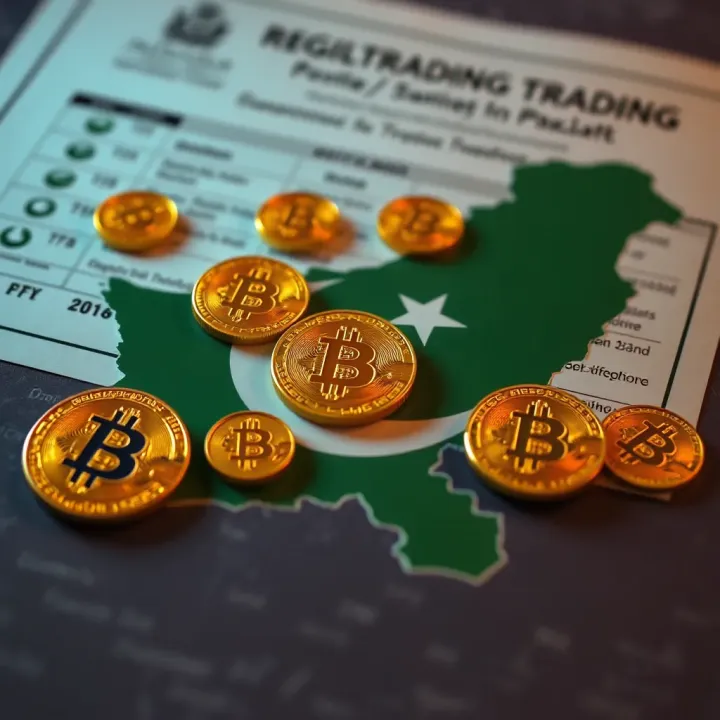
🔍 Curious about crypto trading legality in Pakistan? This guide explains current regulations, financial authorities’ views, risks involved, and useful tips for local traders.
📈 Explore crypto trading courses in Pakistan designed for investors! Learn trading basics, course features, practical skills & stay aware of local regulations safely.

📈 Learn forex trading in Pakistan with practical tips on strategies, risk management, and regulations. Navigate common challenges with confidence and care.
Based on 8 reviews