

Understanding Binary Counters and Their Uses
🔢 Learn how binary counters operate, their types like asynchronous & synchronous, plus real-world uses in Pakistan's digital electronics industry.
Edited By
George Mitchell
Risk management frameworks provide a structured way for businesses to identify, evaluate, and control risks that could impact their objectives. For traders, investors, financial analysts, and crypto enthusiasts, understanding these frameworks is vital to safeguard capital and optimise decision-making.
At their core, risk management frameworks consist of principles and processes that help organisations recognise potential threats before they escalate. These threats could range from market volatility, regulatory changes, cyberattacks, to operational failures. Implementing a clear framework allows firms to allocate resources effectively, avoid sudden shocks, and stay compliant with evolving rules.
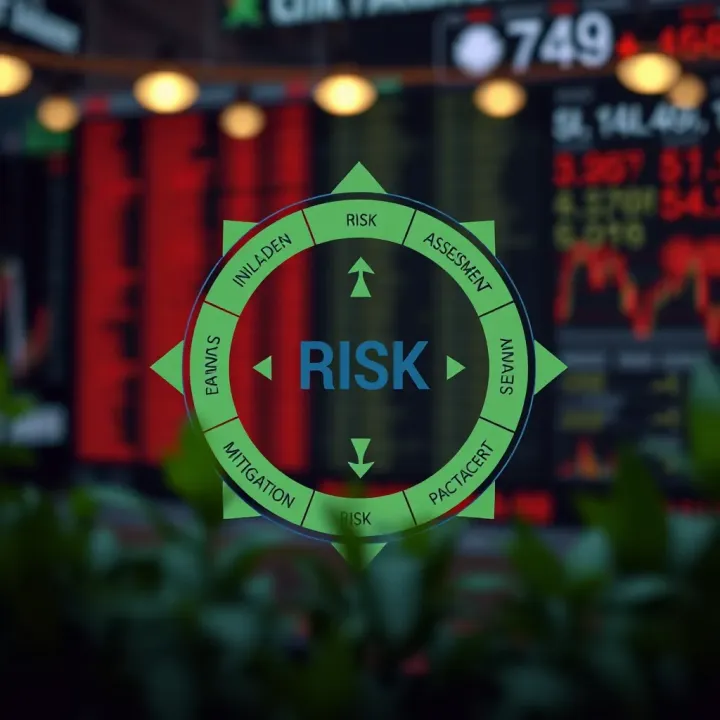
In Pakistan's dynamic business environment, challenges such as fluctuating PKR exchange rates, regulatory unpredictability, and infrastructure issues like frequent loadshedding complicate risk assessment. Frameworks must therefore be adaptable, factoring in local realities alongside global best practices.
A typical risk management framework includes several key components:
Risk Identification: Spotting risks relevant to the specific market or sector.
Risk Assessment: Measuring the likelihood and potential impact of these risks.
Risk Response: Planning how to mitigate, transfer, accept, or avoid risks.
Monitoring and Review: Continuously tracking risks and adjusting controls.
An example is a stockbroker using a framework that integrates technical analysis risk indicators alongside macroeconomic factors unique to Pakistan, such as political instability ahead of elections. They might use scenario analysis to prepare for sudden rupee devaluation that could affect portfolio values.
Effective risk management frameworks are not static checklists but evolving tools that must reflect shifting economic, political, and technological landscapes.
For crypto investors in Pakistan, regulatory uncertainty calls for extra caution. A good framework might include regular review of PTA and SECP announcements, robust security protocols for wallets, and diversification to guard against exchange outages.
Ultimately, tailoring risk management frameworks to Pakistani settings means blending international standards with local expertise. This helps businesses build resilience and protect investments amidst volatility and change.
Risk management frameworks form the backbone of any effective risk strategy, especially for traders, investors, and financial analysts who operate in volatile markets. These frameworks provide a structured approach to identifying, assessing, and controlling risks that could impact financial returns. Without a clear framework, organisations often react to threats on an ad hoc basis, leading to missed opportunities or avoidable losses.
A risk management framework is essentially a set of principles and procedures designed to systematically handle potential risks. The main purpose is to enable organisations to anticipate hazards, estimate their impact, and take informed steps to minimise adverse effects. For example, a stockbroker might use a risk framework to evaluate how fluctuations in currency exchange rates could affect portfolio value. The framework ensures that every risk is understood and managed rather than ignored or blindly accepted.
This is the first and critical step where organisations spot possible risks before they escalate. In a trading environment, this could mean recognising geopolitical events that may cause sudden currency devaluation or identifying weaknesses in a financial model. Proper risk identification allows decision-makers to prepare or adapt strategies accordingly.
After identification, each risk must be analysed to understand its likelihood and potential impact. For instance, a crypto enthusiast might assess how regulatory changes in Pakistan could affect the market’s volatility. This phase prioritises risks by ranking them in terms of severity and probability, helping firms focus resources where they matter most.
Once assessed, organisations develop controls to reduce risk exposure. This could be diversifying investment portfolios, using stop-loss orders, or implementing hedging strategies. Practical mitigation lowers the chance of significant financial damage, making it a core part of successful trading and investment planning.
The risk environment changes constantly, so regular monitoring is vital. For example, a financial analyst tracking stock market trends must review risk controls regularly to adapt to new data or economic shifts. This ongoing process ensures the framework remains effective and responsive.
Implementing a risk management framework strengthens financial resilience and supports better decision-making. Organisations can spot emerging risks early, allocate capital efficiently, and avoid costly surprises. For investors in Pakistan’s unstable markets, such frameworks help balance risk and return with greater confidence. Ultimately, adopting these fundamentals makes an organisation not only safer but smarter when navigating complex financial landscapes.
A robust risk management framework transforms uncertainty into manageable challenges, equipping traders and investors to protect and grow their assets wisely.
By understanding these fundamentals, anyone involved in financial markets can improve risk handling and secure better outcomes.

Risk management frameworks (RMFs) offer structured approaches for organisations to handle uncertainties that could impact their objectives. Traders, investors, and financial analysts benefit from understanding these frameworks as they support consistent decision-making and protect against unexpected losses. Globally recognised RMFs offer standardised processes that simplify risk evaluation, encourage accountability, and enhance transparency.
ISO 31000 sets out general principles and guidelines applicable across industries. It focuses on embedding risk management into every layer of an organisation, ensuring risk responses align with business goals. Pakistani banks like HBL and UBL use ISO 31000 to structure their credit risk and operational risk controls. The framework emphasises a continuous cycle of risk identification, assessment, treatment, and review. Unlike sector-specific models, ISO 31000 is versatile, making it suitable for various sectors involved in investment, trading, or corporate governance.
COSO (Committee of Sponsoring Organisations) offers a comprehensive model often used by publicly listed companies on the Pakistan Stock Exchange (PSX). It integrates risk management with internal control systems, designed to improve strategic planning and compliance. COSO's strength lies in its categorisation of risks into operational, financial, and compliance—categories highly relevant for institutions managing heavy regulatory burdens or volatile markets. For instance, firms assessing the impact of sudden rupee fluctuations on foreign exchange risk adopt COSO to align risk appetite with corporate strategy.
With the rise of digital transactions and online trading platforms in Pakistan, cybersecurity risks have soared. The National Institute of Standards and Technology (NIST) RMF specifically addresses information security risks through a stepwise process: categorise, select, implement, assess, authorise, and monitor controls. Financial institutions and fintech startups in Pakistan incorporate NIST standards to protect customer data and maintain operational resilience. For example, JazzCash applies elements of the NIST framework to manage cyber threats, ensuring compliance with the Pakistan Telecommunication Authority’s and State Bank of Pakistan’s security requirements.
Using these frameworks helps organisations anticipate threats, manage risks systematically, and build confidence among investors and stakeholders.
By adopting frameworks like ISO 31000 for broad risk governance, COSO for integrated internal controls, or NIST for cybersecurity, businesses can tailor strategies that suit their operational context and regulatory environment. The choice depends on the nature of risks faced and the organisational priorities but ultimately adds discipline to risk management.
This section lays a solid foundation for Pakistani traders and analysts eager to implement proven global practices, helping mitigate the diverse risks present in today’s markets.
Risk management frameworks offer a structured way to identify, assess, and control risks, which is vital for Pakistani organisations facing a complex economic and regulatory environment. Implementing these frameworks can help businesses reduce uncertainty, protect assets, and improve decision-making. For example, a textile exporter in Faisalabad could reduce losses by identifying supply chain risks tied to raw material delays due to seasonal transport issues.
Pakistani organisations vary widely—from family-owned SMEs in Karachi to large public limited companies in Islamabad. Therefore, adapting risk management frameworks to local business realities is essential. This means incorporating sector-specific risks like fluctuations in energy supply, political instability, or foreign exchange volatility. For instance, a software company in Lahore might focus heavily on cyber risks and data protection due to increased digital transactions, while a manufacturing unit in Gujranwala prioritises operational risks like machinery breakdown and power outages. Customisation ensures the framework is practical and relevant rather than a generic checkbox exercise.
Pakistan's regulatory landscape is evolving but remains challenging. Frequent policy changes, overlapping regulations by SECP (Securities and Exchange Commission of Pakistan), FBR (Federal Board of Revenue), and other bodies complicate compliance. Organisations often struggle to keep updated, leading to gaps in risk identification. For example, a company dealing in imports must navigate customs duties changes and frequent FBR tax policy revisions, making compliance a moving target.
Risk management is still a relatively new discipline in many Pakistani organisations. Most staff lack formal training, and risk culture is not deeply embedded. Many businesses only react to risks after losses occur instead of proactively managing them. Without awareness, employees miss early warning signs, impacting the effectiveness of frameworks. For example, a bank branch might overlook internal fraud risks due to limited employee screening and training on risk protocols.
Smaller Pakistani firms often have tight budgets and limited manpower, making it difficult to allocate resources for risk management. Unlike multinational corporations, they cannot always afford dedicated risk officers or advanced tools. This forces many to rely on informal practices or external consultants, which can be inconsistent or costly. For example, a medium-sized export business may lack funds for regular risk audits, which leaves them vulnerable to operational disruptions.
To implement risk management frameworks effectively in Pakistan, organisations should:
Start Small and Scale Up: Begin with critical risks and expand the scope gradually to prevent overwhelm.
Invest in Training: Provide regular risk awareness sessions for employees at all levels.
Align with Business Strategy: Integrate risk management into daily operations and strategic planning.
Leverage Technology: Use affordable digital tools for risk tracking and reporting.
Engage Leadership: Secure buy-in from top management to drive a risk-conscious culture.
Consistent application and local adaptation of risk frameworks help Pakistani businesses not just identify but also mitigate risks in a timely and cost-effective manner.
By navigating regulatory requirements, addressing awareness gaps, and managing resource limitations wisely, Pakistani companies can build robust risk management practices tailored to their environment.
Technology acts as a powerful enabler for effective risk management, especially in sectors like finance and trading where rapid decisions matter. It streamlines data gathering, analysis, and reporting, allowing organisations to spot risks early and respond quickly. In Pakistani businesses and financial markets, digital tools can bridge gaps caused by resource limitations and bring structure to risk management practices.
Digital platforms such as RiskWatch or Resolver help firms map and assess risks dynamically rather than relying on static reports. These tools provide dashboards for real-time monitoring, automating alerts when risk thresholds are crossed. For example, a brokerage firm in Karachi might deploy such software to monitor market volatility and compliance risks simultaneously. This instant visibility keeps traders and analysts informed, reducing exposure to unexpected events.
Mobile-based applications are also gaining traction, allowing managers to review risks on the go. Integration with existing financial databases means data accuracy improves while manual errors reduce. These digital solutions provide scalable options for organisations of all sizes, including growing fintech startups in Pakistan.
Advanced data analytics offer deeper insights by crunching huge datasets to reveal hidden patterns or early warning signs. Predictive modelling, powered by machine learning, forecasts possible risk scenarios before they unfold. In the stock market context, this could mean identifying stocks vulnerable to sudden drops based on historical trends combined with current news sentiment.
Banks and asset management firms increasingly use these models to optimise portfolios and comply with SBP regulations. Pakistani firms can also benefit by applying analytics to understand customer behaviour and fraud risks better. This process helps focus risk management resources on the most critical threats, enhancing overall efficiency.
Cyber threats have become one of the biggest risk categories for financial players and investors in Pakistan. Integrating cybersecurity measures within risk frameworks is no longer optional but mandatory. Tools like firewalls, intrusion detection systems, and endpoint security protect sensitive financial data and trading platforms.
Adopting a layer of cyber risk management alongside traditional frameworks helps identify vulnerabilities early. For instance, a stockbroker using digital trading platforms must ensure systems are updated and secure against phishing attacks or ransomware. Proper IT governance aligned with frameworks such as NIST improves resilience to cyber breaches.
Technology is not just about gadgets or software — it's a critical part of modern risk management that sharpens decision-making and safeguards assets.
Together, digital tools, data analytics, and cyber security strengthen risk management frameworks, making them more responsive and relevant to the fast-moving Pakistani financial landscape.
Measuring the effectiveness of risk management frameworks allows organisations to know whether their strategies truly reduce exposure to risks or just add unnecessary layers of complexity. It's not enough to have a framework in place; assessing its performance helps identify weak points and shows where improvements matter most. Pakistani businesses, especially those operating in volatile markets like Karachi or Lahore, benefit greatly when they track how well their risk measures are working amid local economic and political challenges.
Key Performance Indicators (KPIs) serve as practical benchmarks to gauge risk management success. In a trading firm, for example, KPIs might include the number of identified risks versus resolved ones or the frequency of compliance breaches over a quarter. Metrics like risk exposure value, risk reduction rate, and incident response time reflect how effectively risks are controlled.
Consider a crypto exchange platform in Pakistan that monitors transaction anomalies. If its KPI shows a decreasing trend in unresolved risks, it indicates tighter risk controls. Capturing such data consistently guides decision-makers on whether to adjust their existing controls or invest in new safeguards.
Typical KPIs for financial analysts or investors include:
Number of risk events detected before impact
Percentage reduction in financial loss due to risk controls
Timeliness of risk reporting and escalation
Compliance rate with regulatory standards
Routine audits help validate if the risk management framework delivers expected results in real time. Audits — whether internal or external — review documentation, test controls, and interview staff to verify processes work as intended. They uncover gaps that may not surface during daily operations.
In Pakistan’s sector like banking or telecom, regular audits ensure adherence to SBP or PTA guidelines, preventing hefty fines and reputational damage. For example, an audit might reveal lapses in data security controls, prompting immediate action to fix vulnerabilities.
Continuous improvement follows audits by updating policies and methods based on audit findings and emerging risks. This cycle ensures the risk framework remains dynamic rather than stagnant. Organisations embracing continuous improvement often adopt feedback loops, training updates, and technology upgrades to keep risk management aligned with changing threats.
Effective measurement and constantly refining your risk framework isn’t just about compliance. It directly protects your investment, saves cost from unforeseen losses, and builds trust among stakeholders.
In summary, measuring performance using KPIs and scheduling regular audits creates a reliable way for firms—whether stockbrokers or crypto traders—to keep risks under control. This disciplined approach turns risk management from a static document to a vital, living part of your business strategy.
🔢 Learn how binary counters operate, their types like asynchronous & synchronous, plus real-world uses in Pakistan's digital electronics industry.

Discover how effective risk management helps Pakistani businesses reduce losses 💼, boost decision-making 🧠, ensure compliance 📜, and drive success 🚀.

🔢 Learn how binary multiplication works with clear examples and methods. A must-read for anyone interested in computer science and digital electronics in Pakistan.

🔐 Explore binary login systems: how they work, their pros & cons, and practical uses in digital security. Essential insights for Pakistan's tech users 🔍
Based on 11 reviews