
Best Forex Trading Platforms in Pakistan
Looking for the best forex trading platform in Pakistan? Discover top features, security tips, and cost comparisons to match your trading style and needs! 💹🇵🇰
Edited By
Emily Carter
Forex trading, or foreign exchange trading, involves buying and selling currencies to profit from changes in exchange rates. Unlike the stock market, the forex market functions 24 hours a day, five days a week, making it highly active and liquid. Traders worldwide, from banks to individual investors, participate through electronic platforms.
The forex market's primary role is to enable currency conversion for international trade, investment, and travel. For instance, when a Pakistani importer buys goods from China, they need to convert Pakistani rupees (PKR) into Chinese yuan (CNY), and this transaction takes place in the forex market.
Currency prices fluctuate because of many factors like economic data, political events, interest rate changes announced by the State Bank of Pakistan (SBP), and global market sentiment. For example, if Pakistan's inflation rises unexpectedly, the PKR may weaken against the US dollar.
Major participants include central banks, commercial banks, hedge funds, corporations, and retail traders. Central banks, including the SBP, sometimes intervene to stabilise or control their currency’s value.
For Pakistani traders, forex trading offers opportunities but comes with risks such as high volatility and leverage misuse. Local brokers usually provide access to leading pairs like USD/PKR, EUR/USD, and GBP/USD.
Key points to understand:
Currency pairs: Forex is traded in pairs, e.g., USD/PKR, where one currency is bought and the other sold.
Leverage: Brokers offer leverage allowing larger trades with smaller capital, but this increases risk.
Market hours: From Sunday evening to Friday evening PKT, covering global financial centres.
Understanding these basics helps traders make informed decisions, gauge market movements, and manage risks effectively while tapping into the world’s largest financial market.
Forex trading refers to buying one currency while simultaneously selling another. This process allows exchange rates to fluctuate based on supply and demand, affecting how much you pay or receive in both foreign and local currencies. Understanding forex trading helps traders, businesses, and investors navigate a liquid market where over $6 trillion change hands daily.
At its simplest, currency exchange means converting one national currency into another. For example, if a Pakistani exporter wants to receive payments in US dollars, they need to exchange rupees for dollars at the current rate. This exchange rate depends on various factors such as economic data, political events, and market psychology.
Everyday travellers also engage in currency exchange when purchasing foreign currency for trips. Banks and money changers provide these services, reflecting the continuous need for currency conversion worldwide.
Forex trading takes currency exchange further—it is about speculating or hedging by simultaneously buying one currency and selling another. Traders might buy euros expecting the euro to strengthen against the US dollar, aiming for a profit when rates move favourably.
This trading occurs in pairs because no currency holds value in isolation. Common pairs include USD/PKR, EUR/USD, and GBP/JPY. Prices fluctuate constantly, influenced by global financial flows, and traders try to capitalise on these changes.
Businesses engaging in international trade rely heavily on forex transactions. A Lahore-based textile company exporting to Europe must convert euros into rupees to cover local costs. Fluctuations in exchange rates affect the final revenue and profitability.
Similarly, importers need foreign currency to pay overseas suppliers. Managing currency exposure is crucial; otherwise, sudden shifts in exchange rates might lead to losses. For this reason, companies often use forex markets to hedge risks by locking in rates ahead of time.
Apart from trade, many participate in forex purely for profit. Speculators buy currencies they anticipate will rise and sell those expected to drop, making quick gains on price movements.
Most retail traders in Pakistan use online platforms to access this market. However, it's important to understand that forex speculation carries high risk. Unlike stock market investments, currencies can swing wildly within minutes, especially during major news events.
Forex trading serves both practical business requirements and opportunities for profit, but it demands understanding and caution to navigate the risks.
This overview explains what forex trading means and why it matters. The ability to exchange and trade currencies underpins global commerce and offers opportunities for traders, provided they grasp the market dynamics and risks involved.
Understanding how the foreign exchange (forex) market operates is vital if you want to navigate currency trading effectively. It explains when and where trading happens, what currencies you can trade, and how prices are determined. This knowledge helps traders, investors, and analysts make informed decisions, especially in volatile markets like Pakistan’s, where exchange rates affect import costs and remittances.
The forex market is decentralised, meaning it does not have a central exchange like the Pakistan Stock Exchange (PSX). Instead, trades happen directly between parties across various global locations using electronic networks. This setup allows currency trading 24 hours a day, five days a week, covering different time zones without interruption. For example, when the Asian markets close, European markets open, followed by the US session.
This round-the-clock nature benefits traders who can react to news and events in real time, regardless of local business hours. Pakistani traders often take advantage of market overlaps, such as the London-New York overlap, known for higher liquidity and volatility. This structure also means transactions are faster with lower costs compared to traditional stock markets.
Globally, major forex centres include London, New York, Tokyo, and Sydney. London handles roughly 40% of daily trading volume, making it the most liquid centre. New York is crucial due to the US dollar's dominance in currency pairs. Tokyo represents the Asian market, while Sydney kicks off the trading day. Knowing these centres helps traders plan when to enter or exit trades for optimal pricing.
Forex trading always involves currency pairs, quoting one currency against another. These pairs fall into three categories: major, minor, and exotic. Major pairs include the most traded currencies like USD, EUR, JPY, GBP, AUD, CAD, and CHF. For instance, EUR/USD is among the most popular pairs due to liquidity and predictable spreads.
Minor pairs do not include the US dollar but involve other major currencies, such as EUR/GBP or AUD/JPY. Exotic pairs mix a major currency with one from a smaller or emerging economy, like USD/PKR or USD/TRY. Exotic pairs tend to have wider spreads and less liquidity but can offer unique opportunities, particularly for traders focused on emerging markets.
Exchange rates show the price of one currency in terms of another. These rates are quoted with a bid price (what buyers pay) and an ask price (what sellers receive). The difference between these two is the spread—the cost a trader typically pays to the broker. For example, if the USD/PKR pair is quoted at 280.00/280.05, the spread is Rs 0.05. Smaller spreads usually indicate a more liquid market.
Understanding how exchange rates are quoted and what influences them is key. Rates fluctuate due to supply-demand shifts, economic data, geopolitical developments, and central bank policies. Skilled traders use these fluctuations to profit, but they must remain aware of factors affecting spreads and timing for their trades.
In summary, grasping the market structure, trading hours, currency pairs, and exchange rate quotations equips you with the practical knowledge needed to trade currencies confidently, particularly in Pakistan’s dynamic financial environment.
Understanding the key players in the forex market helps grasp how currency values move and why exchange rates fluctuate. Each group plays a specific role, adding liquidity, stability, or speculation to the market. Let's explore who these players are and what makes their actions significant.
Central banks, such as the State Bank of Pakistan (SBP), manage monetary policy and frequently influence their national currencies. Their primary goal includes maintaining currency stability, controlling inflation, and supporting economic growth. For example, if inflation rises rapidly in Pakistan, SBP might raise interest rates to stabilise the rupee and keep prices in check.
Governments and central banks sometimes intervene directly in the forex market to influence exchange rates. This intervention is often aimed at preventing extreme currency fluctuations that could harm exports or imports. For instance, if the rupee weakens sharply against the dollar, the SBP may sell foreign reserves to support the currency and prevent inflation from soaring. Such moves protect the broader economy and maintain investor confidence.
Interbank trading forms the backbone of the forex market. Large banks and financial institutions trade currencies among themselves for business or client needs. This trading sets the market’s reference rates and most closely reflects true supply and demand. For example, Habib Bank Limited and Standard Chartered Pakistan regularly engage in interbank forex transactions to facilitate international trade and investment flows.
These institutions also provide essential liquidity. By being ready to buy or sell currencies in large volumes, they ensure the market remains active and prices stay consistent. This liquidity helps retail traders and businesses enter or exit positions without suffering massive price slippage. Without banks’ willingness to trade continuously, the forex market would struggle with inefficiencies and higher transaction costs.
Retail traders are the individual investors who participate in forex trading, often through online platforms. They contribute to market activity by speculating on currency movements or hedging against risks. In Pakistan, many people use brokers supporting platforms like MetaTrader or Pakistani-friendly brokerages that comply with regulatory rules.
Brokers act as intermediaries between retail traders and the wider forex market. They provide trading platforms, tools, and access to currency pairs, often offering leverage to maximise potential gains. For example, brokers in Pakistan may offer access to major pairs like USD/PKR or EUR/USD with user-friendly apps. Choosing a reliable broker regulated by respected authorities safeguards traders from fraud and ensures transparent pricing.
The forex market depends on these varied participants. Central banks safeguard stability, financial institutions maintain liquidity, and retail traders bring diversity to market activity. Knowing their roles helps traders make informed decisions and better anticipate market movements.
Currency prices in the forex market don't move randomly—they respond to a range of factors that reflect the economic health and political climate of countries. Understanding these elements helps traders make informed decisions rather than guessing. For example, a sudden increase in Pakistan’s inflation rate or a sharp change in interest rates by the State Bank of Pakistan (SBP) can cause the Pakistani rupee to fluctuate noticeably against the US dollar or other currencies.
Inflation, interest rates, and GDP data are strong pillars that guide forex traders. Inflation indicates how quickly prices are rising in an economy. High inflation in Pakistan usually leads the SBP to raise interest rates to stabilise prices. This, in turn, can strengthen the rupee as higher interest rates may attract foreign investment. Similarly, GDP growth measures economic output—strong growth suggests a stable economy, appealing to currency investors.
Political events and announcements also affect currency values significantly. Elections, policy changes, or geopolitical tensions can cause swings in the market. For instance, a government reshuffle or announcement of new trade policies in Pakistan might trigger rupee depreciation if investors see increased uncertainty. Traders keep a close eye on official statements and headlines since such events impact confidence and market direction immediately.
Trader psychology plays a crucial role in forex. When market participants sense a trend, they often act collectively, pushing prices further in that direction. For example, if traders believe the rupee will strengthen due to upcoming remittance flows during Eid, buying pressure might increase, driving the price higher even before the event.
Rumours and expectations also move markets, sometimes more than hard data. In Pakistan, even unconfirmed news about international negotiations, IMF programmes, or sudden policy shifts can cause speculative spikes or drops in currency prices. This means forex traders need to remain cautious and avoid reacting solely to hearsay without verifying facts.
Understanding how these factors interact is essential to navigating forex trading successfully. Both concrete data and market psychology influence currency movements, often combining to create sharp price swings.
Inflation and interest rate announcements from central banks like SBP
GDP reports indicating economic health
Political developments and international relations
Changes in trader sentiment or speculative bets based on rumours
Keeping these factors in mind can help you read market signals better and manage risks effectively when trading forex in Pakistan or beyond.
Understanding common forex trading methods helps traders choose strategies matching their risk appetite, time availability, and market goals. These strategies range from rapid trades capturing small price moves to more patient approaches holding positions for several days or weeks. Each has its own set of tools, advantages, and risks, especially relevant for those aiming to profit consistently in the volatile forex market.
Day trading focuses on opening and closing positions within the same trading day, aiming to benefit from short-term price fluctuations. Traders usually do not hold positions overnight to avoid risks linked with unexpected economic news or price gaps. Scalping takes this approach further by making multiple trades within minutes or even seconds to capture tiny profits repeatedly throughout the day.
This style appeals to traders who can closely monitor charts and react swiftly. For instance, using a one-minute chart to spot quick price reversals can help lock in profits of a few pips on each trade. However, this fast-paced method requires access to reliable internet, low spreads, and efficient order execution to avoid losses from slippage or delayed trades.
Tools like real-time charting software, level 2 price data (showing order book depth), and technical indicators such as Moving Average Convergence Divergence (MACD) assist scalpers and day traders. The risk lies in market unpredictability and the temptation to overtrade. Using high leverage can magnify both gains and losses, which demands strict risk management. A trader without a clear plan or discipline may quickly suffer significant drawdowns, especially with sudden news impacting currency pairs.
Swing trading involves holding trades for several days or even weeks to profit from medium-term price movements. Traders focus on capitalising on trends or price swings rather than immediate, small fluctuations. This suits those who cannot watch the market continuously but want to benefit from larger moves in currencies like USD/PKR or EUR/USD.
Position trading extends this by holding trades over weeks or months, relying heavily on fundamental drivers such as monetary policy changes, inflation data, or geopolitical events. For example, a trader might buy the Japanese Yen anticipating Bank of Japan easing to end, aiming for gains as the yen strengthens gradually.
Successful swing and position traders combine technical analysis with fundamental research. They use chart patterns, support and resistance levels, and indicators like the Relative Strength Index (RSI) to time entries and exits. Simultaneously, they monitor economic announcements and political developments that can shift market sentiment. This balanced approach reduces noise from short-term volatility and focuses on significant price trends.
Each forex strategy fits specific trading styles and risk profiles; understanding these helps traders pick the best method for their goals and resources. Whether quick scalping or patient position trading, discipline and informed decision-making remain key.
By grasping how these common strategies work, Pakistani traders can better navigate forex markets using platforms familiar in local contexts, while managing risks tied to leverage and volatility effectively.
Forex trading offers many opportunities, but it also comes with significant risks and challenges that traders must understand before diving in. Without knowledge of these risks, it’s easy to face heavy losses or even fall victim to scams. This section explains key risks, focusing on market volatility, leverage dangers, and fraud prevention, all crucial topics for anyone serious about trading currencies.
Forex markets are notoriously volatile, with currency prices able to shift rapidly within minutes. This unpredictability means a trader’s open position can quickly flip from profit to loss. For example, unexpected news, such as a sudden change in Pakistan’s monetary policy by the State Bank of Pakistan (SBP), can cause the Pakistani rupee (PKR) exchange rate to jump or drop sharply. Traders holding large positions might face sudden margin calls or forced liquidations.
Volatility can present both opportunity and risk. While short-term traders might benefit from price swings, inexperienced traders often get caught unprepared. Proper risk management, including setting stop-loss orders and avoiding emotional reactions, helps mitigate the impact of volatility.
Leverage means borrowing capital from brokers to amplify trading size, sometimes by 50 times or more. While this can multiply profits, it equally magnifies losses. Suppose a trader in Karachi uses 50:1 leverage to invest Rs 10,000; even a 2% unfavourable movement can wipe out the entire capital.
High leverage increases the risk of losing more than invested if the market moves against the trader. Many new traders fall into this trap, driven by the hope of big gains but unaware of the risks. Limiting leverage, understanding margin requirements, and avoiding overexposure are essential to protect funds.
In Pakistan, many forex brokers are available, but not all are trustworthy. Brokers operating without proper licences from authorities like the Securities and Exchange Commission of Pakistan (SECP) or recognised international bodies pose significant risks. These unregulated brokers often promise unrealistic returns, employ aggressive marketing, or withhold client withdrawals.
A good practice is to verify the broker’s regulatory status and read independent reviews. Legitimate brokers follow transparency rules, have clear terms, and offer customer support. Avoid brokers that pressure for additional deposits or lack a physical office address.
Forex trading requires sharing sensitive information and wiring money. Personal and financial data protection is critical to avoid identity theft and fraud. Always use brokers with secure platforms and encrypted connections.
Additionally, traders should use trusted payment methods such as JazzCash or bank transfers verified by Pakistani banks. Beware of phishing attempts via email or social media impersonating broker staff. Regularly updating passwords and not sharing login details keeps accounts safe. Taking these precautions preserves your capital and peace of mind.
Awareness of risks and careful selection of brokers can save traders from losses and scams that plague the forex world. Learning how to manage volatility and leverage, alongside staying vigilant against fraud, forms the foundation of sustainable forex trading success.
Starting forex trading requires more than just having funds and a platform; it involves understanding key practical steps to trade safely and effectively. For new traders, grasping how to choose a reliable broker, acquiring proper knowledge, and practising before risking real money can make all the difference between success and loss. Especially in Pakistan’s unique market environment, these initial moves shape your longer-term experience.
Important licensing and regulations
Selecting a broker that holds proper licences is essential to protect your deposit and ensure fair trading. In Pakistan, look for brokers registered with the Securities and Exchange Commission of Pakistan (SECP) or those regulated internationally by well-known bodies like the Financial Conduct Authority (FCA) in the UK or the Australian Securities and Investments Commission (ASIC). Without such regulation, brokers might operate without oversight, exposing you to risks such as scams or unfair practices.
Comparison of Pakistani-friendly platforms
Pakistani traders also need brokers that support local payment methods such as JazzCash, Easypaisa, and bank transfers in PKR. Platforms like FXTM, IQ Option, and OctaFX have gained popularity here due to their ease of account funding and withdrawals in local currency. Also consider trading conditions — spread, leverage limits, and customer support responsiveness — before deciding. Pakistani traders should pick brokers offering clear terms and reliable withdrawal processes to avoid unnecessary hassle.
Learning resources and courses
Before jumping into live trading, invest time in learning through reputable courses and tutorials. Many Karachi and Lahore-based training centres offer forex classes tailored for local traders, breaking down technical analysis, chart reading, and risk management with practical examples. Online platforms like Babypips also provide free, structured forex education suited for beginners. Solid knowledge reduces mistakes arising from emotional or impulsive decisions.
Using demo accounts before real trading
Demo accounts let you trade with virtual money on real-time market data. This tool helps new traders understand platform features, practice different strategies, and gauge their risk tolerance without losing actual funds. For instance, you can test how sudden price swings affect your trade or how fast scalping works during volatile hours. Demo trading builds confidence and sharpens decision-making, making the transition to live accounts smoother and less stressful.
Starting properly is critical. Taking time to pick the right broker, boosting your skills with learning, and practising with demo accounts will set a firm foundation for profitable forex trading in Pakistan.
By following these steps carefully, new traders can avoid common pitfalls and step into the forex market prepared — turning trading from guesswork into a structured activity with higher chances of success.
Looking for the best forex trading platform in Pakistan? Discover top features, security tips, and cost comparisons to match your trading style and needs! 💹🇵🇰
Looking for the best forex trading app in Pakistan? Discover top-rated platforms with reliable features, easy use, and secure trading options 📱💰
Learn how binary quotes shape financial trading in Pakistan 💹. Understand their role, compare with market data, and get practical trading tips 🇵🇰📈.
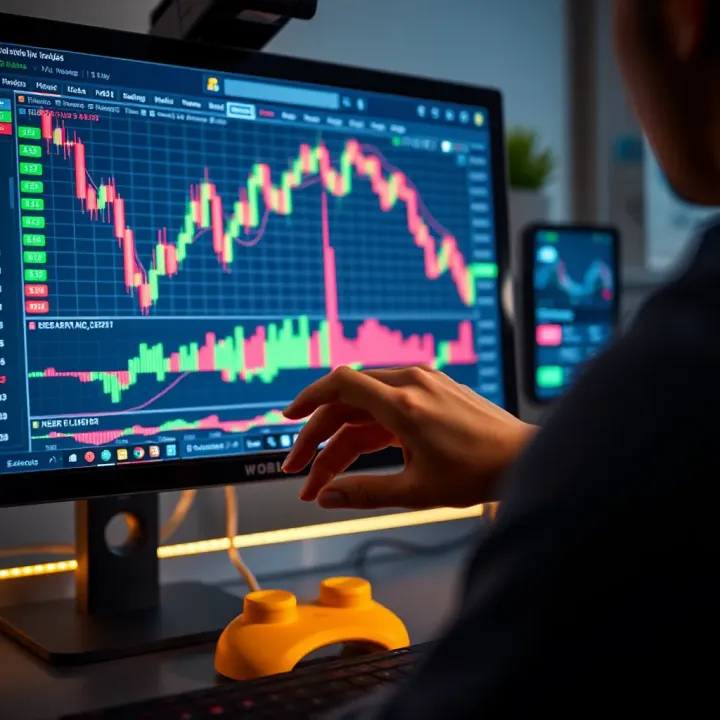
Looking to trade forex in Pakistan? 📉 Explore the top platforms with insights on features, security, and broker options for confident trading.
Based on 12 reviews