

Binary Search Algorithm Explained
Explore how the binary search algorithm works 🔍, its pros & cons, practical examples, and how it stacks up against other search methods in programming.
Edited By
George Thompson
Local Binary Pattern (LBP) is a straightforward yet powerful method used for analysing textures in images. At its core, LBP works by comparing each pixel with its neighbouring pixels and creating a binary code that captures the local texture. This simple numeric representation helps machines understand complex visual patterns such as roughness, smoothness, or edges.
LBP has gained popularity in fields like face recognition, where reliable texture analysis is essential despite changes in lighting or facial expressions. For example, a security system at an airport can use LBP to quickly distinguish faces in a crowd, even if the lighting is inconsistent.
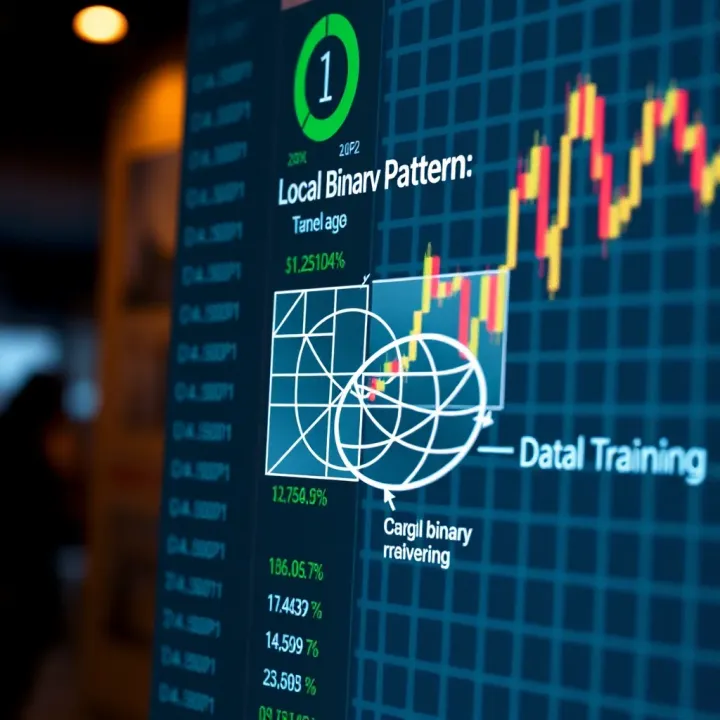
Besides facial recognition, LBP finds use in medical imaging to detect abnormal tissue. By converting MRI or ultrasound scans into texture data, doctors can identify signs of diseases such as cancer or liver fibrosis more efficiently. This indicates the practical value of LBP beyond conventional photography.
The algorithm is attractive for its speed and low computational cost, making it suitable to deploy even on devices with limited processing power, like smartphones or handheld scanners. This opens doors to real-time applications in mobile apps or field diagnostics.
LBP’s simplicity does not compromise its robustness—its capacity to capture critical texture information makes it a favourite for diverse image processing tasks.
It encodes the texture by assigning binary values based on neighbours’ intensity.
The resulting pattern is rotation-invariant if configured correctly, ideal for images taken from different angles.
LBP histograms summarise image textures and serve as feature inputs for machine learning models.
Face recognition systems in security and authentication.
Surface defect detection in industrial quality control.
Classifying different types of terrain or crops in satellite imagery.
Medical imaging for diagnosing tissue abnormalities.
In Pakistan, with growing interest in AI and computer vision, understanding techniques like LBP helps innovators design more efficient solutions for local challenges, such as biometric attendance systems in schools or automated quality checks in textile industries.
Grasping the way LBP works lays a solid foundation to explore its variations and enhancements, which broaden its usability and accuracy in complex scenarios.
This introduction sets the stage for a detailed look at how to implement LBP and leverage its strengths for your projects.
Local Binary Pattern (LBP) is a straightforward but powerful method widely used to describe textures in digital images. Its relevance comes from the ability to capture distinctive texture features quickly, making it a handy tool for various practical applications like face recognition and quality control in industries.
LBP is a texture descriptor that encodes the local neighbourhood of each pixel in an image into a binary number. Imagine focusing on one pixel and comparing it with its neighbouring pixels in a predefined radius. For each neighbour, if its value is equal or higher, it’s assigned a 1; otherwise, 0. This series of binary digits forms a pattern that summarises the texture around the pixel. For example, in facial recognition, this pattern helps distinguish facial characteristics despite variations in lighting or expressions.
The concept of LBP was introduced in the 1990s for texture classification in image processing. Initially, it was a simple operator comparing neighbouring pixels to identify roughness or smoothness in textures. Over time, researchers extended LBP to handle rotation invariance and multi-scale analysis, making it reliable in diverse real-world situations. For instance, it evolved to identify textures on surfaces that appear rotated or to capture patterns at different resolutions, useful in medical imaging to detect abnormalities.
Despite its simplicity, LBP remains an essential feature extraction method because it balances speed and effectiveness without requiring heavy computational resources.
In Pakistan's growing IT sector, especially in startups focusing on biometric security and automated quality assessments, LBP serves as a backbone technology. Its ease of implementation with tools like OpenCV and MATLAB makes it accessible even for small teams.
To sum up, understanding the basics and the origin of Local Binary Pattern prepares readers to appreciate its practical applications better, especially in computer vision tasks where texture analysis proves vital.
Understanding how the Local Binary Pattern (LBP) works is key for anyone dealing with texture analysis or image-based recognition systems. LBP transforms local image features into a simple code that captures texture information efficiently. This process involves converting pixel intensity differences into binary patterns, which simplifies complex textures into manageable numerical values.
The first step in LBP involves comparing a pixel’s intensity with its neighbours. You select a centre pixel and look at its surrounding pixels, usually forming a 3x3 grid. Each neighbouring pixel’s value is compared to the centre pixel’s intensity. If the neighbour is equal to or greater than the centre pixel, it gets assigned a 1; if it’s less, it receives a 0. This thresholding reduces the problem to a binary decision, helping highlight textures based on intensity variations.
This simple procedure is practical since it is computationally light and effective in capturing local contrast. For example, in a face recognition system, thresholding helps detect edges around eyes or mouth, which are critical features distinguishing one face from another.
Once thresholding is done, the resulting binary values are combined in a specific order—often clockwise starting from the top-left neighbour—to form an 8-bit binary number. This binary string represents the local texture pattern around the centre pixel.
The binary pattern formed is vital because it encodes the texture's micro-structures. For instance, repeating stripes on fabric or bumps on a coin’s surface generate distinct binary patterns. These patterns can be compared or clustered for classification or recognition tasks.
After generating the binary string, it's converted into a decimal number. This decimal value serves as the LBP code for the centre pixel. Imagine this as compressing the texture detail into a single number, making it easier to process large images quickly.
With LBP codes assigned across an entire image, one can create histograms summarising texture distribution—useful for distinguishing different materials or surfaces. For instance, in medical imaging, differing tissue textures can be quantified through these histograms, aiding diagnosis.
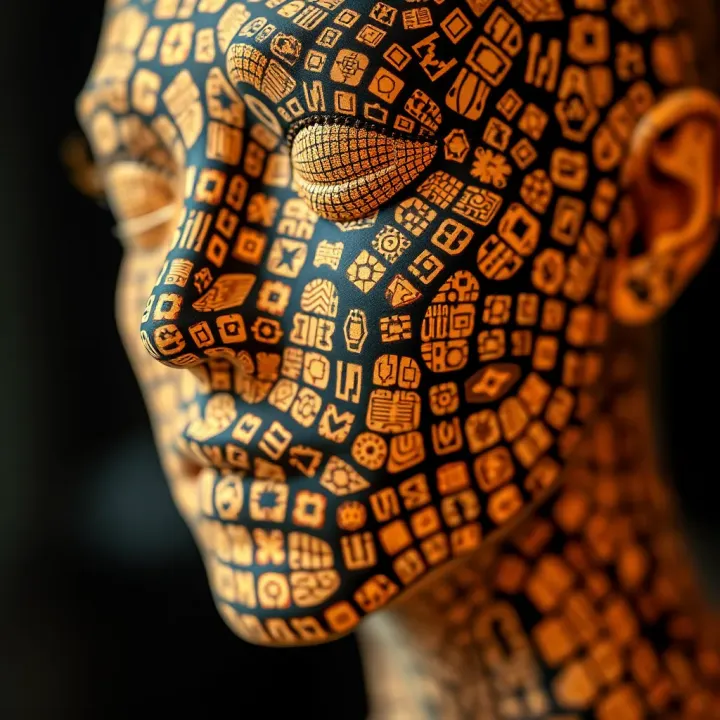
The standard LBP operator uses 3x3 neighbourhoods where each pixel’s neighbours form an 8-bit binary number. It's straightforward and efficient, making it popular for many basic texture classification tasks. However, its simplicity means it may miss larger-scale texture features.
Uniform LBP focuses on patterns with a small number of transitions from 0 to 1 or vice versa in the binary sequence, for example, patterns like 00011100. These tend to represent fundamental textures such as edges, spots, or flat areas.
This operator reduces the dimensionality of the data considerably while preserving essential texture information. It works well in face recognition, where ignoring complex patterns helps speed up processing without sacrificing accuracy.
Rotation invariant LBP handles texture recognition irrespective of orientation. This is achieved by rotating the binary pattern to its minimum value, ensuring that rotated versions of the same texture produce the same LBP code.
Such invariance is very useful in scenarios where images may not be aligned perfectly, such as aerial imagery or surveillance footage from different camera angles.
Multi-scale LBP extends the neighbourhood size beyond the standard 3x3 grid by increasing the radius and number of sampling points. This helps capture texture information at various scales, from fine details to coarser structures.
For example, multi-scale LBP can distinguish between different types of fabric—like silk versus wool—by observing texture at multiple levels. It’s widely used in complex image analysis where textures vary greatly in size.
Local Binary Pattern works by converting complex textures into simplified numerical codes through thresholding, pattern formation, and decimal conversion, with different operators designed to better capture texture properties under varying conditions.
This understanding equips you with the tools to apply LBP effectively across several real-world tasks, from financial document analysis to biometric systems and beyond.
Local Binary Pattern (LBP) plays a significant role in various image processing and computer vision tasks. Its ability to capture texture details reliably and swiftly has made it a preferred choice across several practical fields. Understanding these applications helps reveal why LBP remains relevant despite newer, complex techniques.
LBP is widely used in face recognition systems owing to its effectiveness in describing local facial features. It examines the texture around facial landmarks, such as eyes and nose, by considering pixel neighbourhood relations. This approach performs well even under varying lighting or minor facial expressions, essential for automated security checks at airports or bank ATMs. Compared to complex deep learning models, LBP offers a fast, low-resource alternative for real-time face verification scenarios.
One of LBP's original strengths lies in identifying and classifying textures in images. It compares pixel values within small patches, enabling distinction between different surfaces like rough wood, smooth fabric, or cracked earth. This proves invaluable in industrial quality control, for example, verifying textile patterns or detecting defects in manufacturing lines. In agriculture, LBP can assist in soil type classification or leaf disease recognition by analysing surface textures from digital images.
LBP finds use in medical fields to analyse specialised imagery such as X-rays, MRIs, and ultrasound scans. It helps detect anomalies by highlighting texture changes in tissues, which might indicate disease. For instance, LBP-based methods assist in early tumour detection or classify skin lesions. Its computational simplicity enables use in resource-limited clinics, particularly in remote regions where advanced diagnostic tools are scarce.
LBP contributes to surveillance by enabling robust motion detection and object recognition. Its texture-based approach aids in distinguishing people or vehicles from backgrounds under challenging conditions like low light or shadows. Many CCTV systems incorporate LBP for real-time monitoring and event detection, such as alerting authorities during unusual activities. Its speed advantage ensures continuous video feeds can be processed efficiently without heavy hardware demands.
In human-computer interaction, LBP assists in recognising hand or body gestures through texture cues. This has practical use in controlling devices without touching them, beneficial for applications like virtual classrooms or public kiosks during health outbreaks. It captures local motion patterns, allowing for accurate classification of gestures even with modest cameras. Pakistani tech developers have explored LBP for Urdu sign language recognition too, broadening accessibility for people with hearing difficulties.
The wide-ranging applications of LBP highlight its adaptability and efficiency in processing visual textures, securing its place as a practical tool in many computer vision systems.
By incorporating LBP into diverse systems—from biometric security to medical diagnostics—users benefit from a method that balances accuracy with simplicity. This makes LBP especially valuable where resources or processing time are limited, which remains a common scenario in many Pakistani industries and institutions.
Local Binary Pattern (LBP) stands out for its balance of simplicity and power, but knowing its pros and cons is important before applying it in real-world tasks. Traders and analysts dealing with image-based data, such as satellite images or biometric verification, should weigh its strengths against its weaknesses for optimal results.
LBP is known for being lightweight on processing power. It simply compares each pixel with its neighbours to form a binary pattern, avoiding complex calculations. For example, in a financial institution’s biometric attendance system, LBP can quickly process facial data with minimal lag, enabling real-time recognition without expensive hardware.
This speed makes it ideal for scenarios where quick image analysis is necessary and resources are limited. Unlike deep learning, which requires GPUs and longer training times, LBP performs well even on low-cost machines.
A key advantage of LBP is its robustness to lighting variations. Since it uses relative pixel brightness rather than absolute values, changes in illumination affect it less. This property proves useful for security cameras in fluctuating light conditions, such as during dawn or dusk, where maintaining consistent recognition is a challenge.
For instance, in stock exchange surveillance, cameras capturing trader activities under inconsistent lighting can still rely on LBP for texture-based detection, reducing false negatives caused by shadows or bright sunlight.
LBP’s algorithm is straightforward, making it accessible for programmers and analysts alike. Since its core relies on thresholding and binary conversion, integrating it into existing image-processing pipelines is smooth.
In Pakistan’s growing fintech sector, where developers often work on tight deadlines, LBP allows quick prototyping of solutions involving image recognition without steep learning curves. Open-source libraries like OpenCV provide built-in functions, further easing its adoption.
Despite its benefits, LBP struggles when images contain noise, such as grainy surveillance footage during a monsoon evening or CCTV captures in areas with dust storms. Noise can flip pixel intensities unfairly, leading to incorrect binary patterns.
This sensitivity means analysts should apply noise reduction techniques first or combine LBP with filters, especially when working with lower-quality mobile camera images often used for remote verification.
LBP focuses on local texture around a pixel but ignores wider spatial relationships. For complicated patterns that stretch over large regions, like identifying industrial equipment wear or analysing satellite terrain for crop monitoring, LBP on its own may miss key context.
Traders relying on satellite images for commodity forecasts should consider supplementing LBP with spatially aware methods, such as convolutional filters or graph-based models, to gain richer insights.
LBP works best with simple textures but can struggle with intricate or overlapping patterns common in natural scenes. For example, differentiating between two similar fabric textures in a cotton trading platform or recognising subtle changes in medical scans might require more sophisticated descriptors.
In such cases, combining LBP with more advanced feature extraction techniques or machine learning models improves accuracy but adds to complexity.
Understanding these strengths and limitations helps you decide when LBP fits your project goals and when alternative or hybrid methods are preferable. Its efficiency and ease are strong suits, yet preparing for its challenges will maximise your outcomes.
Implementing Local Binary Pattern (LBP) effectively requires understanding not only the theory behind it but also the practical steps and tools that make it work well in real-world situations. For anyone working with image analysis, such as traders analysing satellite imagery or crypto enthusiasts exploring biometric security, the right implementation can significantly improve accuracy and efficiency.
OpenCV is a widely used, open-source computer vision library that offers built-in support for LBP. It's popular because of its speed and compatibility with multiple programming languages like Python and C++. In practical terms, OpenCV allows you to quickly extract LBP features from images with minimum lines of code. This is particularly useful if you're dealing with large datasets or need to integrate LBP into live systems such as surveillance or automated quality control.
One practical example is face recognition in attendance systems where OpenCV's LBP-based face detectors can rapidly process video frames. Moreover, it provides flexible control over the radius and number of neighbouring pixels considered for LBP, which helps in fine-tuning the feature extraction for specific applications.
MATLAB is another common platform used for implementing LBP, especially in academic and research settings. While it might not be as fast as OpenCV for real-time applications, MATLAB offers extensive image processing toolboxes and easy-to-understand scripting that helps prototype and experiment with different LBP variations quickly.
Its graphical interface and comprehensive documentation make it user-friendly for those less comfortable with complex coding. Researchers working on medical imaging often rely on MATLAB for LBP due to the ability to combine it with other advanced techniques and custom visualisations.
Here is a simple Python snippet using OpenCV to calculate LBP for an image:
python import cv2 from skimage.feature import local_binary_pattern
image = cv2.imread('sample.jpg', cv2.IMREAD_GRAYSCALE)
radius = 1 n_points = 8 * radius
lbp = local_binary_pattern(image, n_points, radius, method='uniform')
print(lbp)
This code extracts an LBP representation using the 'uniform' method, which usually offers better rotation invariance.

### Tips for Effective Use

#### Choosing Proper Radius and Neighbours
Selecting the right radius and number of neighbours is critical. A smaller radius works well for fine texture details, while larger radii capture broader patterns. For example, in textile quality checks, a radius of 1 or 2 with 8 neighbours can highlight minute defects, whereas for satellite terrain classification, a radius of 3 might reveal larger spatial features. Experimenting with these parameters based on your image resolution and texture size improves performance.

#### Preprocessing Images
Good results depend heavily on image quality. Preprocessing steps like histogram equalisation to normalise brightness can reduce sensitivity to lighting variations. Noise removal is also essential since LBP is sensitive to noise, which may distort binary patterns. For instance, traders using thermal images must first filter noise before extracting features to avoid false matches.

#### Combining with Other Features
While LBP provides robust texture information, pairing it with other features like Histogram of Oriented Gradients (HOG) or colour histograms enhances classification accuracy. In face recognition, combining LBP with HOG can better distinguish subtle expressions or shadows. Similarly, in product inspection, combining shape-based features with LBP offers a more complete profile of the object's surface.

> Practical application of LBP depends as much on thoughtful implementation as on theoretical understanding. Tailoring parameters, preprocessing images carefully, and blending techniques makes all the difference in getting reliable and fast results.

This approach ensures Local Binary Pattern remains a powerful tool across diverse fields from financial analytics to biometric verification.Explore how the binary search algorithm works 🔍, its pros & cons, practical examples, and how it stacks up against other search methods in programming.
Explore how binary logic powers computing and electronics ⚙️. Learn about key operations, logic gates, and real-life uses that shape technology today 💡.
Learn how Binary Coded Decimal (BCD) works in computing and electronics 🇵🇰. Explore its formats, benefits, limits & practical uses in calculators & clocks 🕰️.
Explore how binary addition works ⚡ Understand digits, key rules, common challenges, and practical uses in computing and electronics for digital devices 💻
Based on 5 reviews