
Choosing the Best Trading App for Pakistani Investors
🔍 Find out how to pick the right trading app in Pakistan with tips on features, security, costs & regulations—make smarter investment choices today! 📈
Edited By
Benjamin Clarke
Forex trading involves buying and selling currencies against each other to make a profit from their changing values. For Pakistani traders, this market holds unique opportunities due to the PKR’s sensitivity to local and global events. However, diving into forex without a clear understanding can be risky.
The forex market operates 24 hours, five days a week, providing flexibility for traders all around the world, including Pakistan. Major currency pairs like USD/PKR and EUR/USD are commonly traded by Pakistani investors, influenced by factors such as trade balances, interest rates set by the State Bank of Pakistan (SBP), remittances, and geopolitical developments.
Before starting, it’s vital to get familiar with basic terms like “pip” (the smallest price move in a currency pair), “leverage” (using borrowed funds to increase trading size), and “spread” (difference between buy and sell price). Knowing these helps avoid costly mistakes.
Pakistani traders should also pay close attention to broker selection. Choose brokers registered with the Securities and Exchange Commission of Pakistan (SECP) or those approved by global regulators. Popular international brokers and local platforms offer services, but understanding their fee structures, execution speed, and customer support is essential, especially when converting PKR to USD or other currencies.
Risk management is key in forex trading. Always start with a demo account to practice without financial risk. Use stop-loss orders to limit losses on trades and avoid over-leveraging. For example, using a leverage higher than 1:50 might look tempting but can magnify losses quickly.
Remember, forex trading is not a quick-money scheme. It demands time, discipline, and a clear strategy tailored for the Pakistani economic environment.
Key points to keep in mind:
Understand forex terminology and market hours.
Research and choose reliable brokers suited for Pakistani traders.
Practice on demo accounts before risking real money.
Manage risk with stop-loss orders and moderate leverage.
This guide aims to put you on a practical path, steering clear of common pitfalls, so you can trade with confidence and clarity in Pakistan’s forex market.
Understanding the forex market is the foundation of becoming a successful trader. It helps you grasp how currency values fluctuate, who influences these changes, and when to enter or exit trades. For Pakistani traders, knowing this provides an edge in navigating market timings and selecting currency pairs relevant to the local economy.
Forex trading means buying one currency while selling another simultaneously. The goal is to profit from changes in exchange rates. For example, if you believe the US dollar (USD) will strengthen against the Pakistani rupee (PKR), you might buy USD/PKR hoping to sell it later at a higher rate. This is different from stock trading since forex involves currencies, and trading happens round the clock.
Currency pairs always come in pairs: a base currency and a quote currency. The price shows how much of the quote currency you need to buy one unit of the base currency. Taking EUR/USD as an example, if the rate is 1.10, it means one Euro costs 1.10 US dollars. Pakistani traders often watch pairs where PKR is involved, either directly or indirectly through major global currencies.
Major currency pairs relevant to Pakistan include USD/PKR, EUR/USD, and GBP/USD. USD/PKR is directly tied to import-export activities of Pakistan, remittances, and foreign debt repayments. The EUR/USD and GBP/USD pairs matter because Pakistan has trade relations with Europe and the UK, and fluctuations here can indirectly affect the rupee.
Central banks, including the State Bank of Pakistan (SBP), play a big role. They intervene in forex markets to stabilise their currency or control inflation. For instance, SBP may sell dollars to prevent the PKR from falling sharply. Understanding these moves helps traders anticipate market shifts.
Commercial banks and financial institutions facilitate most forex transactions worldwide. They provide liquidity and price quotes. Pakistani banks often deal with forex for their clients’ foreign trade, remittances, and investments. Their activity impacts currency availability and rates on platforms traders use.
Retail traders and brokers form the smaller, but growing portion of the market. Pakistani retail traders access forex markets mainly through brokers offering online trading platforms. Brokers execute trades, provide leverage, and sometimes offer educational tools. Choosing a trustworthy broker with SECP compliance is vital to avoid scams.
The forex market operates 24 hours across different time zones through sessions: Asian, European, and American. Each session brings different volatility and trading opportunities. Pakistan lies in the GMT+5 timezone, which has specific advantages and challenges for trading nights and mornings.
The best times to trade in Pakistan are during the London and New York sessions, overlapping roughly between 3:30 pm and 8:30 pm PKT. These hours see the highest trading volume and liquidity, which often means better price movements and tighter spreads.
Overlapping sessions, especially between London and New York, tend to produce volatile markets. This can benefit scalpers and day traders looking for quick profits but can also mean higher risk. Pakistani traders must balance activity and risk during these hours to make informed decisions.
Understanding forex market basics, participants, and session timings allows you to trade smarter and manage risks effectively, especially in Pakistan’s unique economic landscape.
Grasping the basic terms and ideas in forex trading is a must for anyone stepping into this market. These concepts form the foundation of trading language and help you understand how trades work, manage risks, and make informed decisions.
Forex trading always involves two currencies traded together as a pair. The base currency is the one you are buying or selling, while the quote currency shows how much of it you need to buy one unit of the base currency. For example, in USD/PKR, USD is the base and PKR is the quote currency. If the rate is 280, it means you need 280 Pakistani rupees to buy one US dollar.
This structure is crucial because you don’t just trade single currencies; you trade how one currency is valued against another.
When you see currency quotes, two prices appear: the bid and the ask. The bid is the price at which the market will buy the base currency from you, while the ask is the price you will pay to buy the base currency. The difference between these two prices is the spread, which is effectively the broker’s fee. For example, if USD/PKR bid is 279.95 and ask is 280.05, the spread is 0.10 PKR. Tighter spreads reduce your trading cost, which is ideal for active traders.
Leverage allows you to control a larger position with a smaller amount of money. For instance, a 1:100 leverage means with Rs 10,000 you could trade Rs 1,000,000 worth of currency. This magnifies your profits but also increases losses. So, while leverage can boost returns, it also requires careful risk management.
Before you open trades, brokers ask for a margin, which is a fraction of your trade size kept as security. If your trade moves against you, and your losses approach the margin, the broker may issue a margin call to add funds or close positions. For example, trading USD/PKR with Rs 10 lakh position at 1% margin means Rs 100,000 must be in your account. If your losses cross this, the broker steps in. This highlights that margin and leverage involve serious risks, and beginners should start with low leverage to avoid heavy losses.
Price movements in forex are measured in pips — usually the fourth decimal place in a price quote. If USD/PKR moves from 280.0000 to 280.0100, that's a 1 pip change. Pips help quantify profits or losses precisely, making it easier to track your trades' performance.
A lot defines the size of a trade. A standard lot is 100,000 units of the base currency, but brokers also offer mini (10,000 units) and micro lots (1,000 units) to suit different risk appetites. Using smaller lots is a smart way for beginners in Pakistan to start without risking too much capital.
There are different order types to manage when and how trades execute:
Market order: Buy or sell immediately at the current price.
Limit order: Set a target price for entry or exit; the order executes only if price reaches this level.
Stop order: Protects from bigger losses by automatically closing a position when the price hits a preset level.
Choosing the right order type adds discipline and control to your trading, especially during volatile market hours.
Knowing these terms well not only makes you confident but also helps you avoid costly mistakes as you enter the forex market.
This section ensures you have a strong grip on the language of forex, which is key to moving forward with trading in a practical, informed way.
Beginning your journey into forex trading requires careful preparation, especially in Pakistan's unique financial environment. It is essential to understand how to choose the right broker, pick a suitable trading platform, and practice effectively before risking real money. These initial steps form the backbone for developing confidence and reducing unnecessary losses.
A broker’s license is a key trust factor. In Pakistan, the Securities and Exchange Commission of Pakistan (SECP) oversees financial markets, but forex trading is mostly regulated internationally. Therefore, Pakistani traders should look for brokers regulated by well-known authorities like the Financial Conduct Authority (FCA) in the UK or Australia's ASIC. This ensures your broker follows strict rules, protecting your funds from fraud or unethical practices.
Convenience and security in deposit and withdrawal are crucial. Many Pakistani traders prefer platforms supporting local payment gateways like JazzCash, Easypaisa, or direct bank transfers through HBL or UBL. A broker offering swift deposits and withdrawals via trusted local methods saves you delays and fees. Avoid brokers that only allow obscure international wire transfers, as these can be cumbersome and costly.
Before committing funds, check the broker’s reputation through fellow traders’ reviews and forums. Efficient customer service can make a huge difference if you face issues with trades or payments. Pakistani traders especially value brokers who offer responsive support hours that align with Pakistan Standard Time (PKT) and provide communication in English or Urdu as needed.
MetaTrader 4 (MT4) and MetaTrader 5 (MT5) are the most popular platforms worldwide, including in Pakistan. MT4 offers a straightforward, reliable interface with essential tools for beginners. MT5 builds upon this with more advanced features like additional timeframes and market depth. Both support automated trading, but beginners often start with MT4 due to its simplicity.
When choosing a platform, focus on user-friendliness, charting tools, and available indicators. Beginners should look for platforms that offer easy order management—like simple stop loss and take profit settings—and clear visual cues. Platforms offering educational resources and tutorials also help new traders avoid common mistakes.
Due to loadshedding and busy lifestyles, mobile apps have become essential in Pakistan. Reliable brokers provide smooth mobile versions of MT4 or MT5, letting you trade and monitor positions anywhere. Look for apps that work well on both Android and iOS, offer real-time updates, and allow quick order execution to act fast on market moves.
Demo accounts let you trade with virtual money, so there's no risk of losing real cash while learning. This helps you understand market movements, test strategies, and get comfortable with order types without pressure. For example, a Pakistani beginner might use a demo account to follow the PKR/USD pair trends ahead of important economic announcements.
Quality demo accounts reflect live market prices, spreads, and execution speeds. You should trade during actual market hours to grasp how volatility affects your trades. This approach closely mimics a live environment and prepares you to handle real fluctuations once you move to a real account.
Switching from demo to live must be gradual and planned. Start with small amounts to minimise risk while adjusting to emotional factors like fear and greed, which do not exist in demo trading. Setting clear goals and maintaining discipline during this transition phase is vital to avoid common pitfalls many Pakistani traders face when starting with real money.
Practising thoroughly and choosing the right tools at the start of your forex trading saves you headaches later and builds a strong foundation to grow your skills confidently.
Risk management is the backbone of successful forex trading, especially for beginners in Pakistan's volatile financial environment. Protecting your capital means preserving the money you invest, so you can continue trading and learning rather than burning through your account quickly. Without a solid approach to managing risk, even a good trading strategy can lead to heavy losses. This section focuses on key tools and habits that help you minimise risk, control losses, and steadily grow your investment.
Stop loss orders are your safety net in forex trading. By setting a stop loss, you define the maximum loss you are willing to accept on any trade. For example, if you buy USD/PKR at Rs 280 and set a stop loss at Rs 275, your position will automatically close if the price drops to that level, preventing further losses. This control helps avoid emotional decision-making when currency pairs move against you.
Taking profits at realistic targets is just as important as limiting losses. Instead of aiming for huge gains in one trade, you should set attainable goals based on market conditions. For instance, if you enter a trade expecting a 50-paisa gain per unit, setting your take profit at this target ensures disciplined exit points. This approach avoids the common pitfall of holding trades too long, hoping for more profit but risking reversals and losses.
Leverage allows you to control larger positions with a smaller amount of capital, multiplying both potential profits and losses. Balancing risk and reward means using leverage carefully to avoid wiping out your account in just a few bad trades. For example, Pakistani regulators often recommend starting with low leverage like 1:10 or 1:20 rather than 1:100, keeping risk manageable.
Common mistakes with high leverage include overtrading, risking large portions of capital on single trades, and chasing losses. Many new traders get tempted by the prospect of quick profits but then face heavy losses due to rapid market swings. Using modest leverage and respecting margin calls protects your funds and helps you last longer in the market.
Defining your trading goals and risk tolerance upfront is essential. Whether you want to earn an extra Rs 10,000 monthly or build a larger forex portfolio over years, knowing your expectations keeps you focused. Understanding personal risk tolerance means determining how much of your capital you are willing to risk per trade—generally 1-2% is a safe range.
Maintaining discipline and emotional control separates successful traders from the rest. Forex markets can be stressful, and impulsive decisions driven by greed or fear often cause losses. Sticking to your plan even during volatile times means resisting the urge to trade without analysis or increase positions beyond your limits. Over time, this builds confidence and steadiness in your trading approach.
Protecting your capital isn't just about avoiding losses; it allows you to learn, adapt, and keep trading long-term, which is the real key to success in forex.
In summary, managing risk with stop loss, realistic profit targets, responsible leverage, and a solid trading plan gives you a foundation to approach forex trading in Pakistan with confidence and control rather than guesswork and luck.
Starting forex trading, particularly in Pakistan, means facing a set of common challenges that can shape your success or failure. Understanding these hurdles early on helps you prepare and avoid costly mistakes. Whether it's dealing with the unpredictable nature of markets, spotting fraudulent brokers, or managing your own emotions, each challenge demands attention and a clear strategy.
Currency prices react violently to economic news and world events. For instance, announcements from the State Bank of Pakistan (SBP) on monetary policy decisions or political instability in the country can cause sudden shifts in the PKR exchange rate. International matters like US interest rate changes or oil price shocks also directly impact forex pairs involving the dollar or other major currencies.
Such volatility means currency prices can swing widely within minutes. This unpredictability can amplify risks—for example, an unexpected official statement may cause the PKR to weaken rapidly, catching traders off guard. Therefore, keeping an eye on the economic calendar and understanding key indicators is essential to anticipate potential market moves.
Handling these fluctuations requires setting clear stop-loss and take-profit limits to protect your capital. It's wise to avoid trading during highly volatile events unless you have enough experience. Using smaller position sizes helps manage risk during unstable periods. Remember, it is better to miss a trade than face heavy losses from sudden price swings.
Pakistani forex beginners often fall victim to scams due to aggressive marketing by unregulated brokers promising quick profits. Common scams include brokers refusing withdrawals, manipulating charts, or providing misleading information on leverage and spreads. Beware of offers that sound too good to be true, such as guaranteed returns or free bonuses without clear terms.
To verify broker legitimacy, check their registration status with the Securities and Exchange Commission of Pakistan (SECP) or credible international bodies like the Financial Conduct Authority (FCA) or Australian Securities and Investments Commission (ASIC). Look for transparent trading conditions, client fund segregation, and user reviews from Pakistani traders. Using well-established brokers with local deposit and withdrawal options, like bank transfers or JazzCash, can reduce risk.
Forex trading is not just about numbers; your emotions play a significant role. Many beginners struggle with greed—chasing larger profits quickly—and fear—panic selling after minor losses. This emotional rollercoaster often leads to impulsive decisions, worsening losses.
Managing greed and fear involves developing discipline. For example, setting a fixed daily loss limit helps prevent emotional trading. Sticking to your trading plan means accepting small, consistent gains instead of gambling for a big win.
Patience is critical in forex. Markets do not always move as you expect; sometimes waiting for the right setup or holding a position longer can yield better results. Impatient traders may exit too early or enter trades without proper analysis. Practising patience underlines successful trading habits that Pakistani traders must nurture over time.
Successful forex trading balances knowledge, solid preparation, emotional control, and choosing the right partners. Recognising common challenges allows you to trade smarter and preserve your capital in Pakistan’s dynamic forex environment.
🔍 Find out how to pick the right trading app in Pakistan with tips on features, security, costs & regulations—make smarter investment choices today! 📈
Explore top trading apps in Pakistan 📱 Compare features, security 🔒, regulations ⚖️, and user experience to find the perfect platform for smart investing 📈.
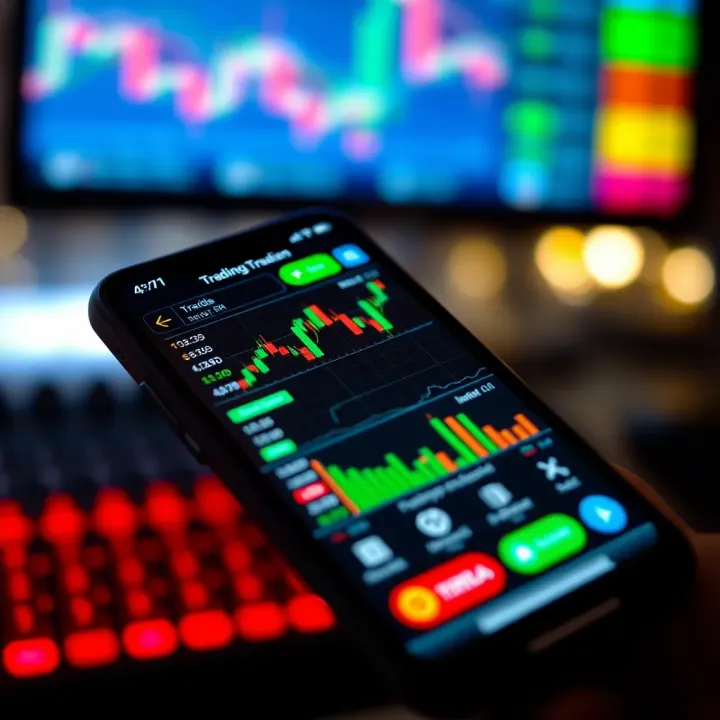
📈 Find the best trading app for beginners in Pakistan! Learn key features, compare top apps, and get tips to trade smart and avoid mistakes.
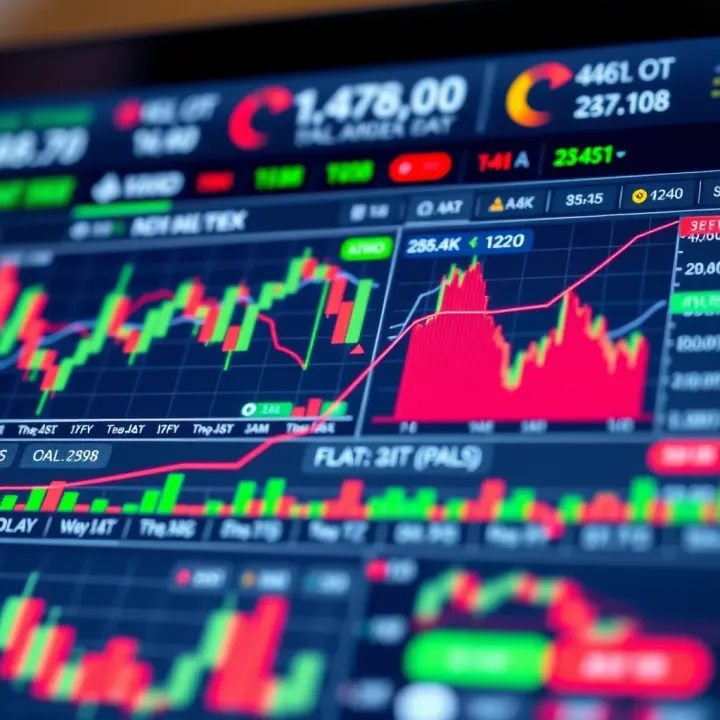
Explore Pakistan's top trading apps 📱 with detailed insights on features, fees, security, and ease of use. Find the perfect app for your trading style! 📈
Based on 13 reviews