
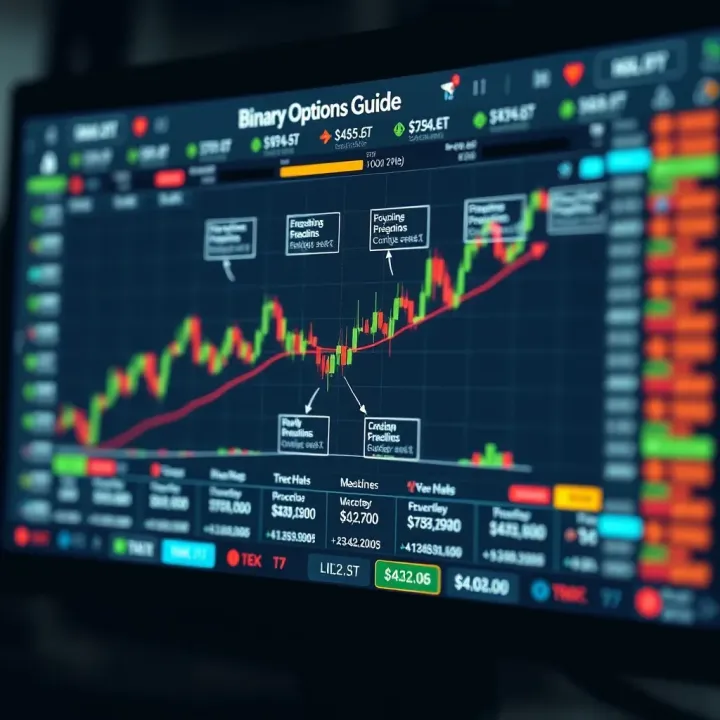
Binary Options Trading Guide for Pakistan
📊 Explore binary options trading in Pakistan with a clear guide on how it works, risks, legal tips, trusted platforms, strategies, and scam warnings.
Edited By
Emily Carter
Binary trading involves predicting whether an asset's price will rise or fall within a fixed time frame, offering a yes-or-no payoff. While this form of trading attracts many due to its simplicity and potential for quick returns, it carries significant risks that traders in Pakistan need to understand clearly.
In Pakistan, the legal status of binary trading remains somewhat unclear. Neither the Securities and Exchange Commission of Pakistan (SECP) nor the State Bank of Pakistan (SBP) explicitly permit or regulate binary options trading as a formal investment activity. This ambiguity is mainly because binary options often resemble gambling more than traditional trading, leading regulators to treat them with caution.

The SECP has repeatedly warned investors against unregulated platforms offering binary trading, highlighting that many such services operate without valid licences. These platforms often target Pakistani traders through online ads promising high profits, but they frequently lack transparency and proper safeguards. As a result, many investors end up losing their capital to scams or unreliable service providers.
"Investors must be vigilant and avoid unlicensed platforms since the absence of regulatory oversight increases the risk of fraud immensely," advises a senior official at SECP.
Pakistani traders interested in binary trading should consider the following:
Check if the platform is registered with SECP or any recognised international regulator.
Understand that no government body guarantees returns or protects deposits in binary trading.
Be aware that funds deposited with overseas platforms might not be recoverable if the operator shuts down.
Given this, engaging in binary trading is risky and not encouraged under the current Pakistani financial regulations. Until the government clarifies or updates laws, traders should approach binary options with caution, preferably focusing on regulated markets such as equities, commodities, or forex trading through authorised brokers.
This section sets the stage for a deeper look at how regulatory frameworks, risks, and best practices intertwine when considering binary trading in Pakistan. Understanding these aspects is vital to protect your investment and trade responsibly within the law.
Grasping the fundamentals of binary trading is essential before considering it as an investment option. Binary trading operates on a simple "yes" or "no" proposition, where traders speculate on the price movement of an asset within a predetermined time frame. This simplicity appeals to many in Pakistan curious to try their hand in financial markets but lacking extensive experience.
Binary options are contracts that pay out a fixed amount if the underlying asset meets certain conditions by expiry, or nothing if it does not. For example, you might predict that the price of crude oil will be above $70 per barrel at 3 pm today. If your prediction is true, you earn a preset profit; if it’s false, you lose your stake. This fixed risk and reward mechanism makes binary options straightforward but also risky.
Trades in binary options usually involve selecting an asset, deciding the direction (up or down), choosing the expiry time, and placing an investment amount. The payout is known upfront, so traders are aware of potential profits or losses. For instance, a trader may bet Rs 10,000 on the Pakistani rupee strengthening against the US dollar over the next hour. Once the expiry hits, the trade automatically settles, simplifying the process, especially for new traders.
Unlike traditional stock or forex trading, where profit or loss depends on how much an asset’s price moves, binary trading offers only two possible outcomes: a fixed gain or a total loss of the investment. Stock trading allows investors to hold shares for long-term growth or dividends, while forex trading entails continuous price fluctuations and opportunities for hedging. Binary trading eliminates complexity by focusing solely on price direction within a time limit, but this comes at the cost of higher risk and less flexibility.
Binary trading attracts many Pakistani traders because it promises quick returns and simple decision-making without requiring deep market analysis. With rising internet penetration and smartphone usage, platforms offering binary options are accessible to a wider audience. However, the lure of fast profits sometimes blinds traders to the high probability of losses. Given Pakistan’s growing interest in online trading through apps like Bykea or Easypaisa for payments, binary trading platforms exploit these trends to market themselves aggressively.
Understanding how binary trading works helps Pakistani traders weigh its appeal against the inherent risks and the country's legal environment before stepping in.
In short, knowing the mechanics provides clearer expectations about what you are getting into and why caution is necessary with these investments.

Understanding the legal and regulatory status of binary trading in Pakistan is vital for anyone considering this kind of investment. Traders must know which practices are lawful to avoid falling into legal troubles or financial scams. Since binary options involve betting on price movements within short time frames, they attract both high risk and regulatory attention globally, and Pakistan is no exception.
The Securities and Exchange Commission of Pakistan (SECP) plays a key role in regulating financial markets in the country, including overseeing trading platforms. SECP's stance on binary options is quite strict; it does not recognise binary trading as a legal form of investment. This is because these options often resemble gambling more than traditional asset trading, leading to concerns about investor protection.
In practical terms, this means SECP has not licensed any local binary trading brokers and explicitly warns investors against dealing with unregulated platforms. Such warnings are issued to protect the public from potential fraud or hefty financial losses, especially as many platforms operating online are based outside Pakistan and are not accountable to local laws.
Recent circulars by SECP have reiterated this position. These notices typically caution against participating in binary trading offered by foreign or unregistered entities. They highlight that Pakistan's regulatory framework does not support binary options trading due to its speculative nature and the absence of transparent market practices.
For traders, these circulars serve as a reminder to stick to regulated avenues such as the Pakistan Stock Exchange (PSX) or authorised brokers offering forex and commodities trading within legal boundaries. Ignoring these advisories can lead to unexpected financial damage with limited or no legal recourse.
When it comes to binary trading platforms, no SECP-approved services currently operate within Pakistan. Most binary options platforms are overseas firms advertising their services online. Pakistani users accessing these platforms do so at their own risk, as these firms do not hold licences from Pakistani authorities, and thus no legal protection applies.
This unclear legality puts local traders in a vulnerable position. If a trader loses funds or faces fraudulent practices, they rarely succeed in recovering money due to the lack of a local regulatory framework covering these dealings. Additionally, many of these platforms use aggressive marketing tactics, sometimes misleading investors by promising unrealistic returns.
Legal risks for Pakistani traders include potential violations of the Prevention of Electronic Crimes Act, should the trading platforms be involved in deceptive or fraudulent schemes. There is also the matter of unregulated cross-border transactions, which might draw the attention of financial monitoring agencies enforcing anti-money laundering standards.
Therefore, traders need to be aware that engaging in binary options trading without SECP authorisation is fraught with risk and could lead to both financial losses and legal complications. It is safer to explore alternatives where Pakistan’s financial authorities provide clear guidelines and investor protection.
When considering binary trading, it is essential to prioritise platforms regulated by SECP or other credible bodies. This safeguards your investment and ensures compliance with Pakistan's financial laws.
Binary trading carries significant risks, especially in Pakistan where regulatory oversight remains limited. Understanding these challenges is crucial for anyone considering this form of trading. From scams to legal pitfalls, traders must be aware of these realities to avoid financial losses and legal troubles.
Many binary trading platforms operating in Pakistan lack proper authorisation from the Securities and Exchange Commission of Pakistan (SECP). These unregulated brokers often promise high returns but operate without transparency or adherence to basic safeguards. Unlike established financial institutions, they usually don’t have a physical presence or transparent business practices, making it difficult for local authorities to hold them accountable.
For instance, a trader might sign up on a platform that looks professional but is overseas-based and unregulated by Pakistani authorities. This creates a risk where traders may find it impossible to withdraw their funds or receive any recourse if things go wrong.
Common scam tactics include manipulating software to show false profits or losses, encouraging traders to keep investing more money or pressuring them to deposit extra funds before withdrawals can be made. Some platforms also utilise aggressive marketing strategies targeting inexperienced traders in Pakistan, promising quick wealth with little effort.
These scams often involve fake trade results and delayed or denied payouts. A typical scenario involves a trader seeing their account balance grow rapidly, only to have their withdrawal requests rejected or met with stalling tactics. These practices not only drain money from traders but also discourage them from reporting these platforms due to fear or embarrassment.
The high-risk nature of binary trading means losses can accumulate quickly. Traders may find themselves losing their initial investment within minutes or hours because binary options rely heavily on market timing and prediction, which can be volatile. Many who engage without strong knowledge or strategy face devastating financial consequences.
For example, a trader who invests Rs 50,000 may lose the entire amount if their prediction is wrong, with little chance of recovery. This risk is amplified by the presence of unregulated brokers who manipulate outcomes, effectively stacking the deck against traders.
Since binary trading platforms in Pakistan often operate without SECP approval, participating in such activities can raise legal concerns. Trading through unregistered brokers can be seen as unauthorised financial activity, which might attract penalties or legal action under financial laws or anti-money laundering regulations.
Moreover, Pakistani traders may find it difficult to seek legal relief if disputes arise with foreign brokers. The lack of regulatory cover means law enforcement agencies have limited power to intervene. Hence, involvement in unapproved binary trading platforms exposes traders not only to financial loss but also potential legal risks.
Traders in Pakistan should view binary trading with caution. The combination of unregulated platforms and significant financial risks makes it a dangerous market for those unfamiliar with its pitfalls. Always verify the licensing status of brokers and keep in mind the legal uncertainties involved.
Understanding these risks equips traders to make smarter choices and guards them against falling prey to unscrupulous operators.
Navigating binary trading within Pakistan's legal and financial framework is essential to protect your investments and avoid legal troubles. Since many binary options platforms operate without authorisation, Pakistani traders face risks ranging from financial loss to legal penalties. Understanding how to identify licensed brokers and exploring safer investment alternatives can make a significant difference for anyone interested in this market.
How to check SECP approval: The Securities and Exchange Commission of Pakistan (SECP) is the main body regulating financial services. Before committing funds, verify whether a binary trading platform is approved by checking the official SECP website or contacting their helpline. SECP maintains a list of licensed firms authorised to offer trading services in Pakistan. Operating with an unlicensed broker means you lack legal protection, which many fraudulent platforms exploit.
Recognising legitimate versus risky platforms: Licensed platforms usually display SECP endorsement prominently and follow local compliance rules, including KYC (Know Your Customer) procedures and transparent fee structures. Conversely, risky platforms often promise guaranteed returns, lack clear contact information, and may not require standard verification documents. For example, some international binary platforms popular in Pakistan do not hold SECP licences — using those puts your capital at unnecessary risk.
Local stock market opportunities: Investing through the Pakistan Stock Exchange (PSX) offers a more regulated environment with established legal safeguards. Pakistani investors can participate via registered brokers who comply with SECP regulations. Unlike some binary trading schemes, the PSX provides not only equity exposure but also dividend income and voting rights in companies. This makes stock market investments a safer, more transparent choice for long-term wealth building.
Forex and commodity trading regulations: Forex trading in Pakistan is regulated by the SECP and the State Bank of Pakistan (SBP), which means traders must operate through authorised forex dealers and brokers. Commodity trading for gold, oil, and agricultural products is also carried out within regulated frameworks, offering safer avenues than binary options. For instance, traders using SBP-approved forex dealers can access currency pairs safely with adherence to local laws. Understanding these regulations helps investors avoid illegal dealings and potential penalties.
Always prioritise due diligence. Verify broker licences, understand local regulations, and consider regulated investment channels to manage risk effectively. This approach helps protect your capital and keeps you on the right side of Pakistan’s financial laws.
Understanding the legal nuances and risks of binary trading in Pakistan is essential before making any investment decisions. This final section summarises critical points regarding the current legal standing and risks tied to binary trading, helping you navigate this complex area with practical insights.
Currently, binary trading in Pakistan sits in a rather grey area but leans towards being unregulated and largely discouraged by financial authorities such as the Securities and Exchange Commission of Pakistan (SECP). No clear licence or approval exists for local binary trading platforms, which means traders face significant legal risk, including the possibility of the platform being declared illegal, and loss of funds without recourse. For example, many brokers operating without SECP’s oversight are flagged for potential scams, creating uncertainty and risk for traders.
Due diligence, therefore, becomes a non-negotiable step for anyone thinking about entering binary trading. This means verifying the broker’s credentials, checking for SECP approval, and researching the platform's reputation via credible financial forums or news sources. Without enough homework, traders might unknowingly land on fraudulent platforms or unregulated services, resulting in avoidable losses.
Before investing, best practices include starting with small amounts, using demo accounts to understand how trades work, and avoiding offers that sound too good to be true, such as guaranteed returns. This cautious approach helps protect your money and builds familiarity with the market dynamics. Keeping an eye on platform transparency, withdrawal policies, and customer support quality can also make a big difference.
Seeking expert and legal advice is equally important, especially as Pakistan’s regulatory environment around binary trading is complex and evolving. Consulting a financial advisor familiar with local laws or a legal professional can offer personalised guidance. They can help you understand your rights, the legitimacy of trading platforms, and the tax implications of trading gains or losses.
Navigating binary trading without clear legal safeguards is risky; informed decisions backed by due diligence and expert advice can safeguard your investment and avoid pitfalls.
Taking these points seriously equips you to make smart, informed choices about binary trading within Pakistan’s current financial framework. Staying updated on regulatory changes by following SECP announcements and financial news ensures you don’t miss critical shifts that could affect your investments.
📊 Explore binary options trading in Pakistan with a clear guide on how it works, risks, legal tips, trusted platforms, strategies, and scam warnings.

Explore reliable strategies for binary options trading in Pakistan 📈. Learn essential concepts, risk management, and tips to boost your trading decisions!

📊 Discover practical, effective strategies for trading binary options in Pakistan! Learn risk management, technical indicators, and smart market analysis to boost your success.

📊 Explore the ins and outs of binary options trading in Pakistan. Learn market trends, risks, legal facts, and tips to trade wisely and boost your success.
Based on 11 reviews